
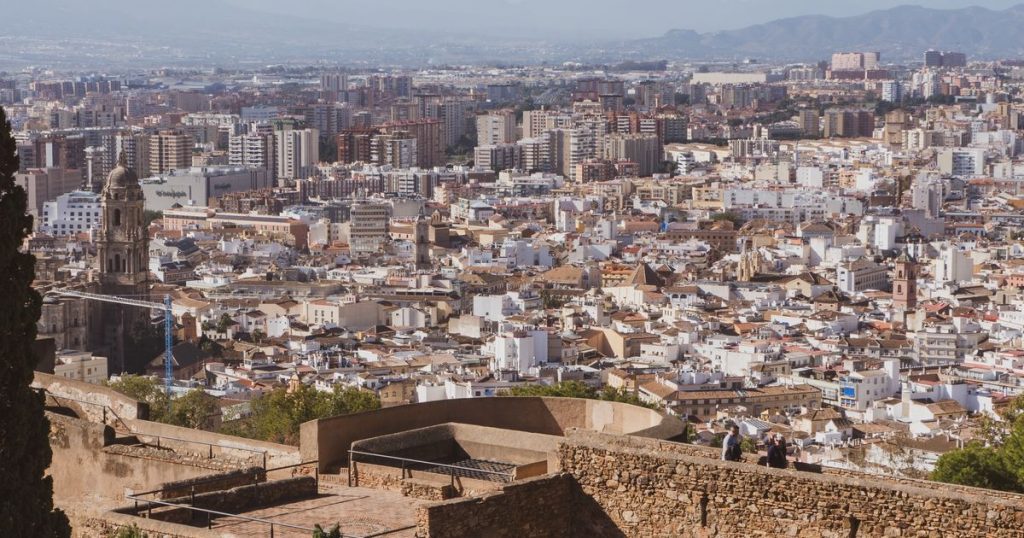
Malaga closed 2025 with 1,834,637 staying travelers, 13.8 percent more than the previous year, according to INE data presented by the City Council. It’s no longer just a stopover city on the way to the Costa del Sol: it’s the destination.
The problem is the same as always. You have one day, the city has a fortress on a hill, a Roman theater, an unfinished cathedral, three good museums, and a beach. In what order do you do all that without ending up exhausted?
In two lines: start with the Alcazaba at 9:00 AM, head down to the center at noon, leave the museums for the hottest hours, and go up to Gibralfaro at sunset. Tickets: between €10 and €35.
Is one day enough to see Malaga?
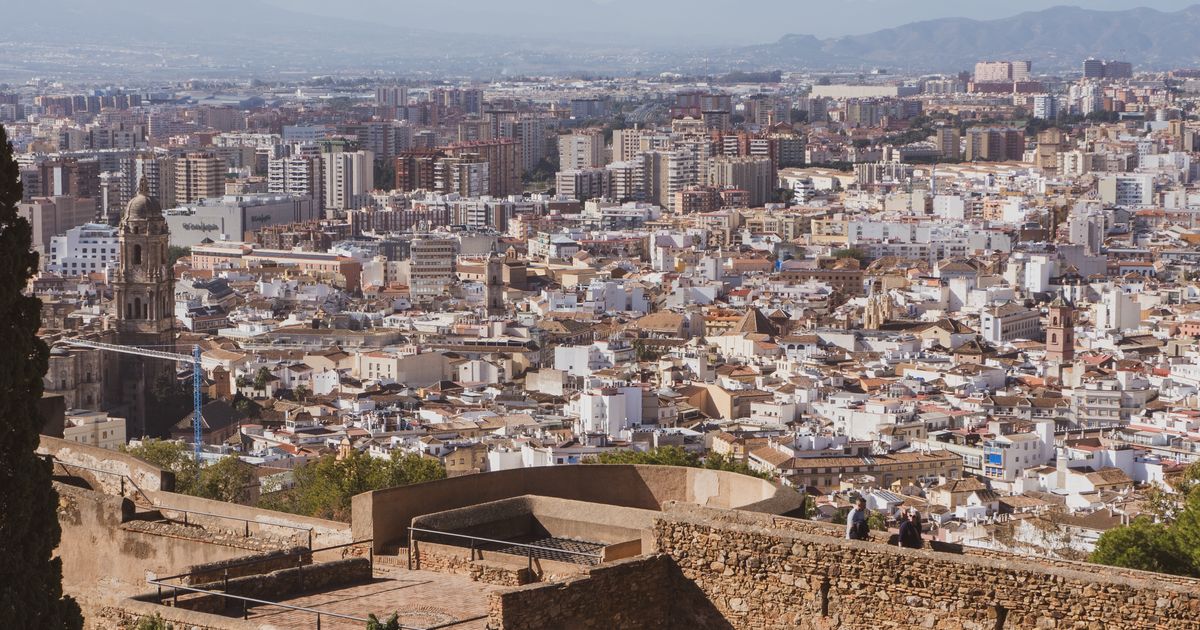
For the city, yes. Malaga’s historic center is compact and almost everything important fits into a square kilometer, with only one uphill exception: Gibralfaro.
Lo que no cabe en un día es la provincia. El Caminito del Rey, Ronda, Nerja o Antequera son excursiones de día completo cada una. Si solo tienes 24 horas, quédate en la capital y hazla bien.
This is the order we propose, designed so that the sunniest hours find you indoors:
| Time | Stop | Entrance | Time |
|---|---|---|---|
| 09:00 | Alcazaba | €7 | 45-60 min |
| 10:15 | Roman Theater | Free | 20-30 min |
| 11:00 | Cathedral (La Manquita) | €10 | 45-60 min |
| 12:15 | Atarazanas Market | Free | 30-45 min |
| 13:15 | Calle Larios and center | Free | 30 min |
| 14:00 | Lunch | — | 1 h 30 |
| 16:00 | Picasso, Thyssen, or Pompidou Museum | €7-13 | 60-90 min |
| 18:00 | Gibralfaro Castle | €7 (or €10 combined) | 45 min |
| 19:30 | Muelle Uno and La Malagueta | Free | 1 h |
Before continuing, check which day you’re coming. It’s what ruins most plans in Malaga, and almost no one warns you about it:
| Day | What is closed or changes |
|---|---|
| Monday | The Roman Theater and the Carmen Thyssen Museum are closed |
| Tuesday | The Centre Pompidou is closed |
| Sunday | The Atarazanas Market is closed and the Cathedral only opens from 2:00 PM to 6:00 PM. In return, the Alcazaba and Gibralfaro are free from 2:00 PM |
If you come on a Sunday, flip the day around: museum or center in the morning, Cathedral at 2:00 PM, and Alcazaba and Gibralfaro afterwards, for free. If you come on a Monday, replace the Roman Theater with the Picasso Museum or the Pompidou.
Morning: the Alcazaba and the Roman Theater
Start here, at 9:00 AM sharp, for two reasons: it’s the steepest stop of the day and at that time the fortress is empty. The Alcazaba costs €7 (€3 reduced) and opens from 9:00 AM to 8:00 PM in summer, with the last entry at 7:00 PM.
It is an 11th-century Muslim palatial fortress, built on the hillside. You explore it by climbing between double walls, courtyards, and arches, with the city appearing through the gaps. Allow between 45 minutes and an hour.
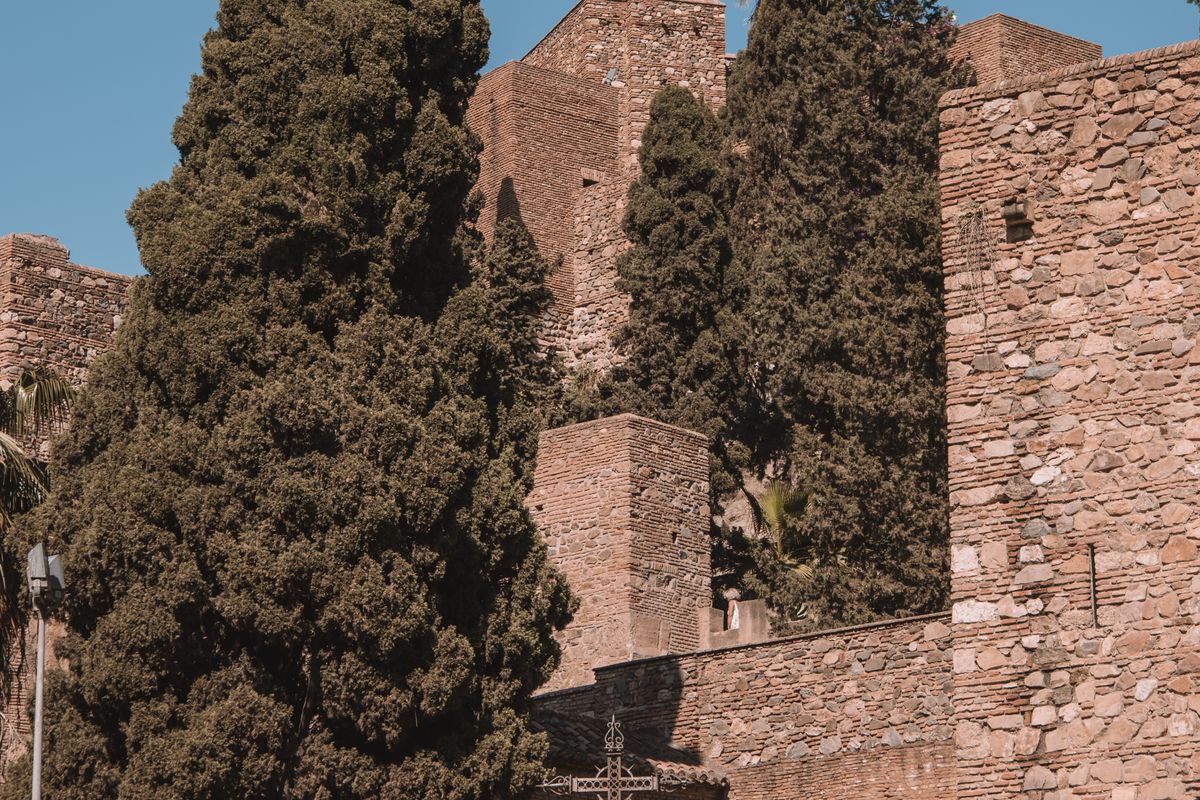
At the foot of the Alcazaba, without moving, is the Roman Theater: it is free, opens Tuesday to Saturday from 10:00 AM to 6:00 PM, and Sundays and holidays from 10:00 AM to 4:00 PM. It can be seen in twenty minutes from above and in thirty if you go down to the stands.
The contrast is the best summary of the city: a 1st-century Roman theater at the foot of an 11th-century Muslim fortress, both just two streets away from a Renaissance cathedral.
Mid-morning: the Cathedral that was left without a tower
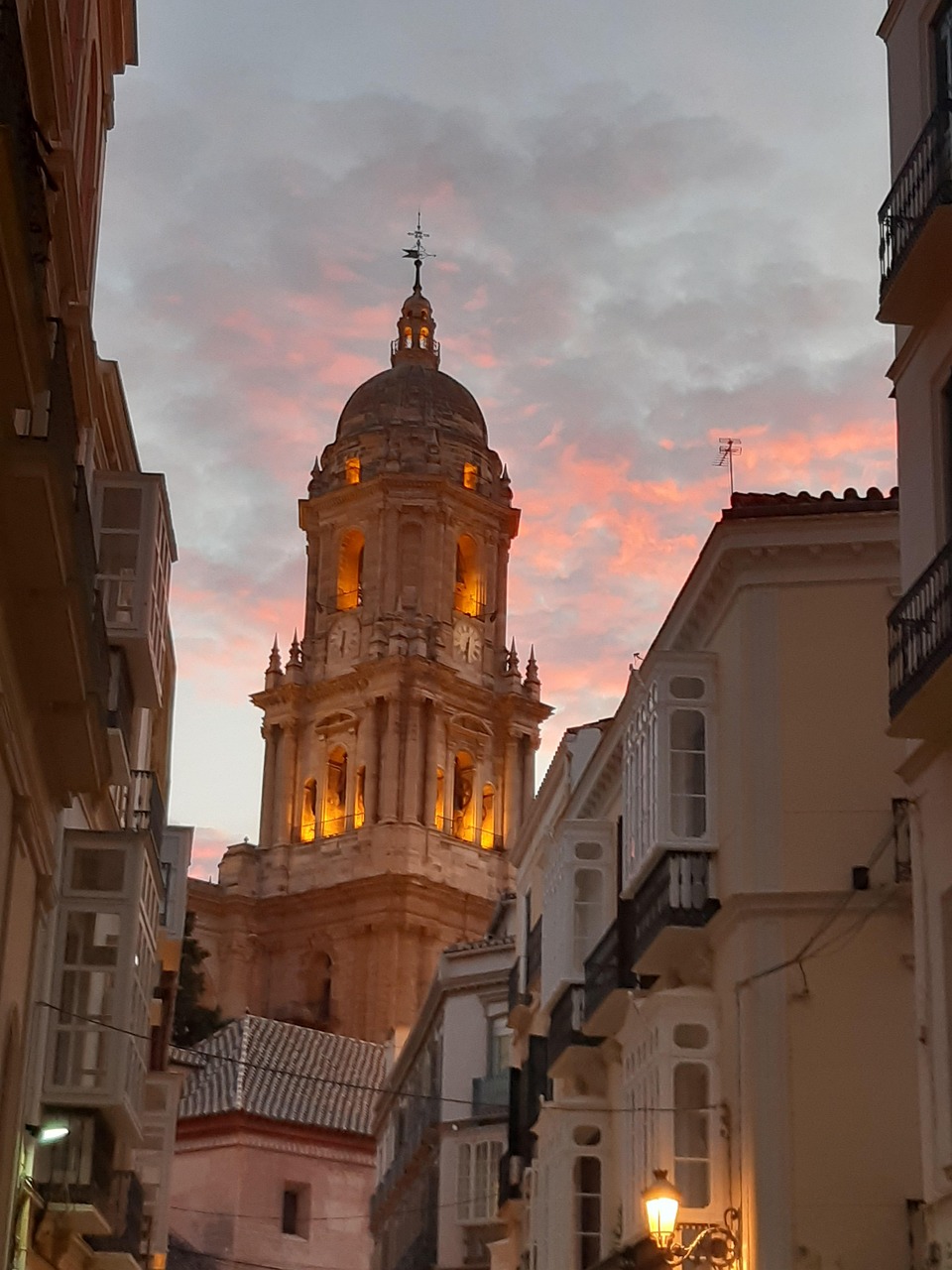
The Malaga Cathedral costs €10 with an audio guide included. It opens Monday to Friday from 10:30 AM to 6:30 PM, Saturdays until 6:00 PM, and Sundays only from 2:00 PM to 6:00 PM, if there is no service. There is a free access slot from 8:30 AM to 9:00 AM.
Everyone calls it La Manquita, and for good reason: it’s missing the south tower. It was left unfinished in the 18th century and remains that way, with the stump visible. It’s the first thing that sticks with you about the city.
Inside, what’s worth the time is the choir, with its carved stalls, and the height of the vaults. With the audio guide included in the price, there’s no need to hire anything else.
Noon: Atarazanas Market and Calle Larios
This is where almost all the itineraries you’ll find skip past, and it’s a mistake. The Atarazanas Central Market is free and opens Monday to Saturday from 8:00 AM to 3:00 PM, closed on Sundays.
It’s a real market, not a converted gourmet market. The building preserves a marble gate from the 14th-century Nasrid shipyard, which is literally what atarazanas means, and a huge stained-glass window at the back depicting the old city.
There are bars inside. It’s the best place in Malaga to eat well, quickly, and cheaply: fried fish, preserves, and vermouth, standing up, among people doing their shopping. If your visit falls on a Sunday, this is the gap you’ll have to fill with something else.
Two minutes away is Calle Larios, the main pedestrian artery of the center. In summer, they cover it with white awnings from side to side, which is why you can walk it at noon without roasting.
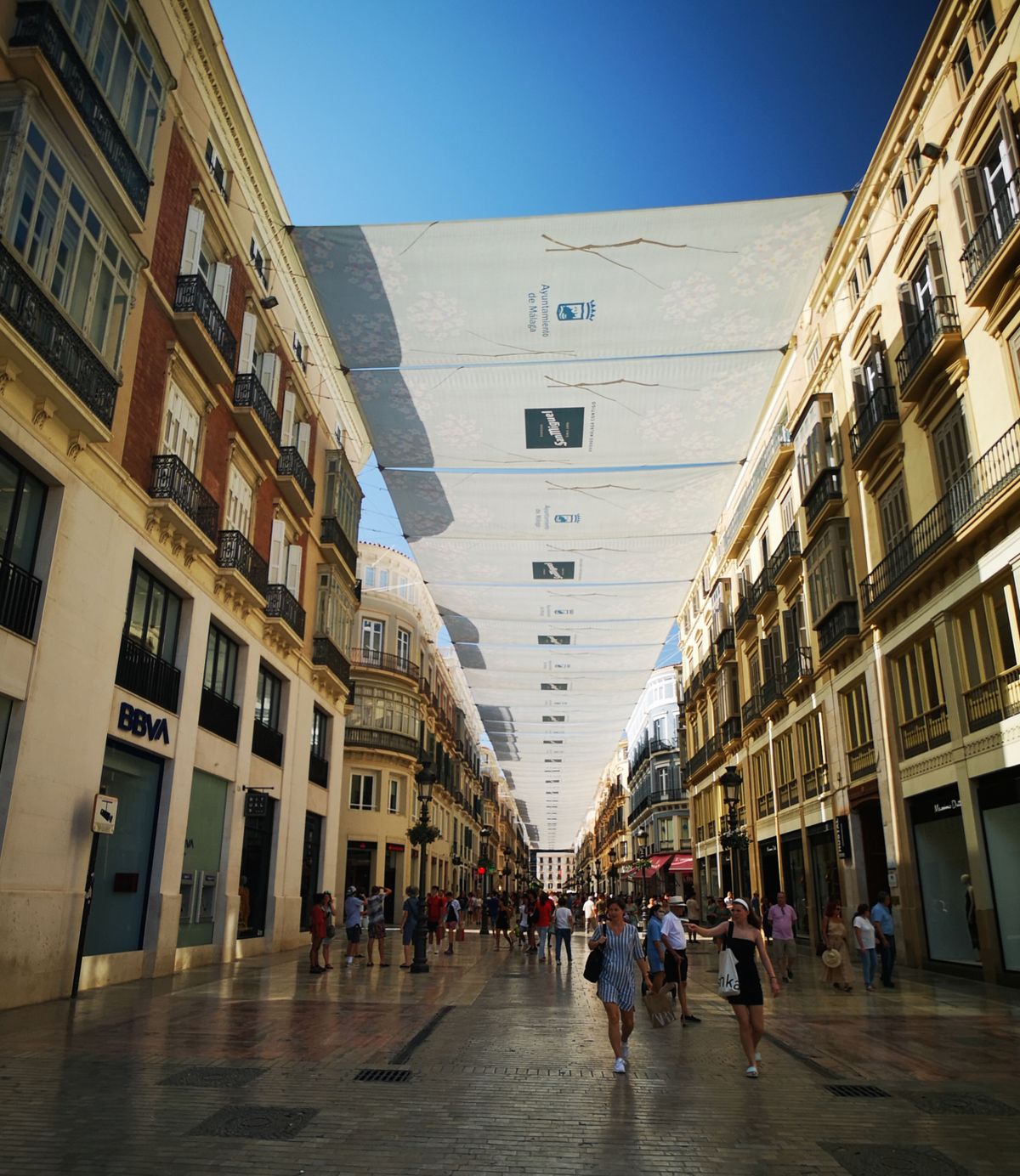
Afternoon: Picasso, Thyssen, or Pompidou?
The central hours are for being indoors. Malaga has more museums than can fit in a day, so choose one. Picasso was born here, and that’s the argument for the first one:
| Museum | Price | Hours | For whom |
|---|---|---|---|
| Picasso Museum | €13 (€11 reduced) | 10:00 AM-7:00 PM in September and October | The obvious visit. Free the last 2 hours on Sunday |
| Carmen Thyssen | €12 (€15 with archaeological site) | T-S 10:00 AM-8:00 PM, closed Monday | 19th-century Andalusian painting. Free on Sundays from 4:00 PM |
| Centre Pompidou | €9 combined / €7 collection | M and W-S 9:30 AM-8:00 PM, closed Tuesday | 20th-century art, in the colorful cube at the port |
A warning about the Picasso price: it’s €13. Many websites still publish €7 or €9, which are old rates. And if you have to choose by schedule, look at the day: the Thyssen closes on Mondays and the Pompidou on Tuesdays.
The practical trick: in Malaga, the question isn’t which museum you like best, but which museum is open the day you’re coming. It’s the variable that ruins most plans.
Sunset: Gibralfaro Castle and the best view of the city
The Gibralfaro Castle costs €7, or €10 for a combined ticket with the Alcazaba, which is worth it if you’re going to do both. Same hours: until 8:00 PM in summer, last entry at 7:00 PM.
Let’s be clear: the castle inside is modest. What you pay for is the view. From the ramparts, you can see the entire city and the port with the cruise ships. And you see the La Malagueta bullring from above, like a toy ring.
How to get up without doing the climb
And here’s the fact we haven’t found in any other Malaga itinerary: the EMT line 35 goes right up to the Castle itself. It’s literally called Av. Andalucía – Gibralfaro and its last stop is the Castle, passing by the Bullring and the English Cemetery. A single ticket costs €1.40, with a free transfer within the first hour.
The alternative is to walk up from the Alcazaba via the mountain path. It’s beautiful and has viewpoints, but it’s about 30 minutes of continuous climbing. In September, at six in the evening, it’s still really hot.
Night: Muelle Uno, the Palmeral, and La Malagueta
Head down to the port to finish. The Palmeral de las Sorpresas is a walkway covered by a wavy white pergola that connects the pier with the center, and Muelle Uno is the shopping and terrace area with La Farola, the white lighthouse, in the background.
From there, La Malagueta beach is a ten-minute walk away: 1.2 kilometers of Blue Flag sand, right in the center. It’s where the day ends if you feel like a swim, and where dinner starts if you feel like an espeto.
How much does it cost to see Malaga in a day?
Between €10 and €35 per person in tickets, depending on what you choose. This is the real count, with prices verified on official websites in August 2026:
| Plan | What’s included | Total in tickets |
|---|---|---|
| Minimum | Combined Alcazaba + Gibralfaro. Roman Theater, Atarazanas, Larios, and beach for free | €10 |
| Balanced | The above + Cathedral | €20 |
| Complete | The above + Picasso Museum | €33 |
| Sunday | Alcazaba and Gibralfaro free from 2:00 PM, Picasso free the last 2 hours | €10 (Cathedral only) |
Look at the last row. Sunday is, by far, the cheapest day to see Malaga, although in exchange you lose the Atarazanas Market and the Cathedral only opens in the afternoon.
Malaga in September: how to dodge the heat
September is one of the best months to come. According to AEMET normal values for the airport station, the average maximum in September is 28.2°C, with an average of 23.5°C and 255 hours of sunshine in the month.
Translated: the weather is good, the sea is still warm, and it’s not the oven of August. But it’s 28 degrees on average, and daily highs go beyond that. Walking from two to five in the afternoon is still tough.
Hence the order of the itinerary: the two outdoor stops with climbs —Alcazaba and Gibralfaro— are first thing in the morning and at sunset, and the central hours are spent in the market, eating, and in a museum. It’s not a whim, it’s the difference between enjoying the day and dragging yourself along.
What to eat in Malaga (and what isn’t really from Malaga)
Three things are from here without question, and it’s worth distinguishing them from what is simply Andalusian:
- The sardine espeto. Sardines skewered on a cane and roasted beside a boat full of sand. It is from Malaga with documented origin: the first establishment to serve them opened in El Palo in 1882.
- The boquerón victoriano. Here is the nuance that almost no guide makes: fried fish is not exclusive to Malaga, it’s shared with Cadiz and Huelva. What’s from Malaga is the boquerón victoriano and a lighter batter, made of wheat flour, compared to the chickpea flour of Cadiz.
- Malaga sweet wine. Its own Designation of Origin since 1933, one of the oldest in Spain, with Muscat and Pedro Ximénez from the Axarquía and the Montes de Málaga.
For breakfast, a mollete: a flat, soft bread that here is eaten toasted with oil. And for raisins, those from the Axarquía have their own PDO.
By area: in the center, tapas and fried fish shops; in the market, bars; and for the espeto, you have to go to the beach, in La Malagueta or better in El Palo, which is where it was born.
How to get around Malaga
- City bus (EMT): single ticket €1.40, with a free transfer within the first hour.
- To Gibralfaro: line 35, Av. Andalucía – Gibralfaro, which ends at the castle stop itself.
- From the airport: the express bus on line A costs €4.00. The C1 commuter train connects to the center for around €1.80 and is the fastest option during rush hour.
- By car: the center is mostly a pedestrian zone. Expect to pay about €2 per hour in the city center parking lots, and don’t try to park near the Alcazaba.
On foot, the historic center can be crossed entirely in twenty minutes. The only stretch that really tires you out is the climb to Gibralfaro.
If you have extra time: La Concepción Botanical Garden
This is the place that doesn’t appear in any of the “Malaga in one day” itineraries we’ve reviewed, and it deserves a spot. La Concepción is a 19th-century historical-botanical garden, with an entry fee of €5.20, open from 9:30 AM to 8:30 PM from April to September and closed on Mondays.
The fine print, so you don’t risk it: it’s about 5 kilometers from the center, it’s not walkable, and a proper visit needs an hour and a half or two hours. It’s reached by city bus or taxi, so add the round-trip journey. It doesn’t fit into a tight day.
But if you come in September, have the whole day and don’t care for the beach, a subtropical garden with bamboo, huge ficus trees, and waterfalls is a rare and good contrast to the stone of the center.
How to see it all without walking under the sun
This is where we come in. Malaga is not a large city, but the itinerary above has two climbs and a few long stretches between stops.
We travel this city every day in electric tuk tuks, and the pattern we see is always the same: people arrive with a nine-stop plan and by the fourth, they’re looking for shade. What eats up the day isn’t the monuments, it’s the travel between them.
We are not a sightseeing tour company. We are transport with a host driver: we take you from stop to stop, tell you what you’re seeing along the way, and leave you wherever you want to continue on your own. No climbs, and in the shade.
- 1-hour tour — to do the historic center and the climb to Gibralfaro without walking it.
- 2-hour tour — the complete tour, including the port and La Malagueta.
- All our tours in Malaga, with departure points and schedules.
Shall we book it? Check availability in Malaga or call +34 674 62 33 37.
Other cities, same format
Si Málaga es una parada de un viaje más largo, tenemos el mismo itinerario hora a hora para otras ciudades, con precios verificados igual que aquí:
- What to see in Seville in one day — with the same criteria for dodging the heat.
- What to see in Valencia in 1 day — old town, City of Arts and Sciences, and beach.
- Qué ver en Ronda en un día — el Tajo, el Puente Nuevo y la bajada al río, la excursión clásica desde Málaga.
- Qué ver en Alicante en un día — el castillo, Santa Cruz y la Explanada.
Arriving in Malaga on a cruise? The plan changes quite a bit when you have limited hours and a boarding time: Malaga cruise stopover: what to do in a few hours.
Frequently Asked Questions
Is one day enough to see Malaga?
For the historic center, yes. In a well-organized day, you can fit the Alcazaba, the Roman Theater, the Cathedral, Calle Larios, and Gibralfaro, plus a museum. What doesn’t fit is the province: the Caminito del Rey or Ronda each need their own day.
How much does it cost to see Malaga in a day?
Between €10 and €35 in tickets, depending on what you choose. The combined Alcazaba and Gibralfaro ticket is €10, the Cathedral is €10, and the Picasso Museum is €13. The Roman Theater, Atarazanas Market, Calle Larios, and the beaches are free.
What can you see for free in Malaga?
The Roman Theater is free from Tuesday to Saturday. Also Calle Larios, the Atarazanas Market, the Palmeral de las Sorpresas, Muelle Uno, and the beaches. On Sundays from 2:00 PM, the Alcazaba and Gibralfaro are also free for everyone.
Is it worth going up to Gibralfaro Castle?
For the view, yes: you can see the entire city, the port, and the bullring from above. As for the castle itself, it’s more modest than the Alcazaba. If you can only do one of the two and you’re interested in architecture, stick with the Alcazaba.
Can you go up to Gibralfaro by bus?
Yes. EMT line 35 is called Av. Andalucía – Gibralfaro and its last stop is the Castle. A single ticket costs €1.40 and saves you a long climb in the sun. It’s the alternative to walking up from the Alcazaba, which is about 30 minutes uphill.
What is the best month to visit Malaga?
May, June, September, and October. In September, the average maximum is 28.2°C with 255 hours of sunshine, according to AEMET: good weather without the August heat and with the sea still warm. July and August are tougher for walking at noon.
Is the Picasso Museum included in any combined ticket?
Not with the Alcazaba or the Cathedral, which are paid separately. The Picasso Museum costs €13 (€11 reduced) and includes an audio guide. It is free the last two hours on Sundays, so it’s worth checking the day of your visit before buying.
What do you absolutely have to eat in Malaga?
Sardine espeto, which is roasted in a sand boat and has been from here since 1882. Boquerones victorianos, the Malaga variant of fried fish. And Malaga sweet wine, with its own Designation of Origin since 1933, one of the oldest in Spain.
Can you see Malaga in one day with children?
Yes, by adjusting the pace. The Alcazaba and Gibralfaro have slopes and steps, so it’s best to go up in a vehicle or by bus. The Roman Theater, Muelle Uno, and La Malagueta beach work well with children and are free.
Written by Pep Mora, from the WalkTuk team in Malaga. Prices and hours verified on the official websites of each monument in August 2026; confirm them before your visit, as they change.