
A single day in Valencia is enough to fall in love, if you plan it well. Anyone who shows the city daily knows the secret: Valencia concentrates its best in two areas—the medieval old town and the City of Arts by the sea—linked by a 9 km park that used to be a river. Organize your day around that and you can fit everything in.
This is the itinerary we recommend: realistic, organized, and designed so you don’t waste your only day figuring out bus lines.
Your day, in short: old town in the morning (Serranos Towers, Cathedral, Silk Exchange, and Central Market), paella at noon, Turia Garden and City of Arts in the afternoon, and Malvarrosa beach at sunset.
A note before starting: geography rules
Valencia has a curious history that explains its current shape. After the great flood of 1957, the city diverted its Turia river and turned the dry bed into a park that crosses it from end to end. That garden is now your green highway: it connects the old town with the City of Arts and Sciences. Keep that in mind and the map organizes itself.
Morning: what to see in Valencia’s old town
Start early in the medieval heart, before the sun and the crowds get too intense.
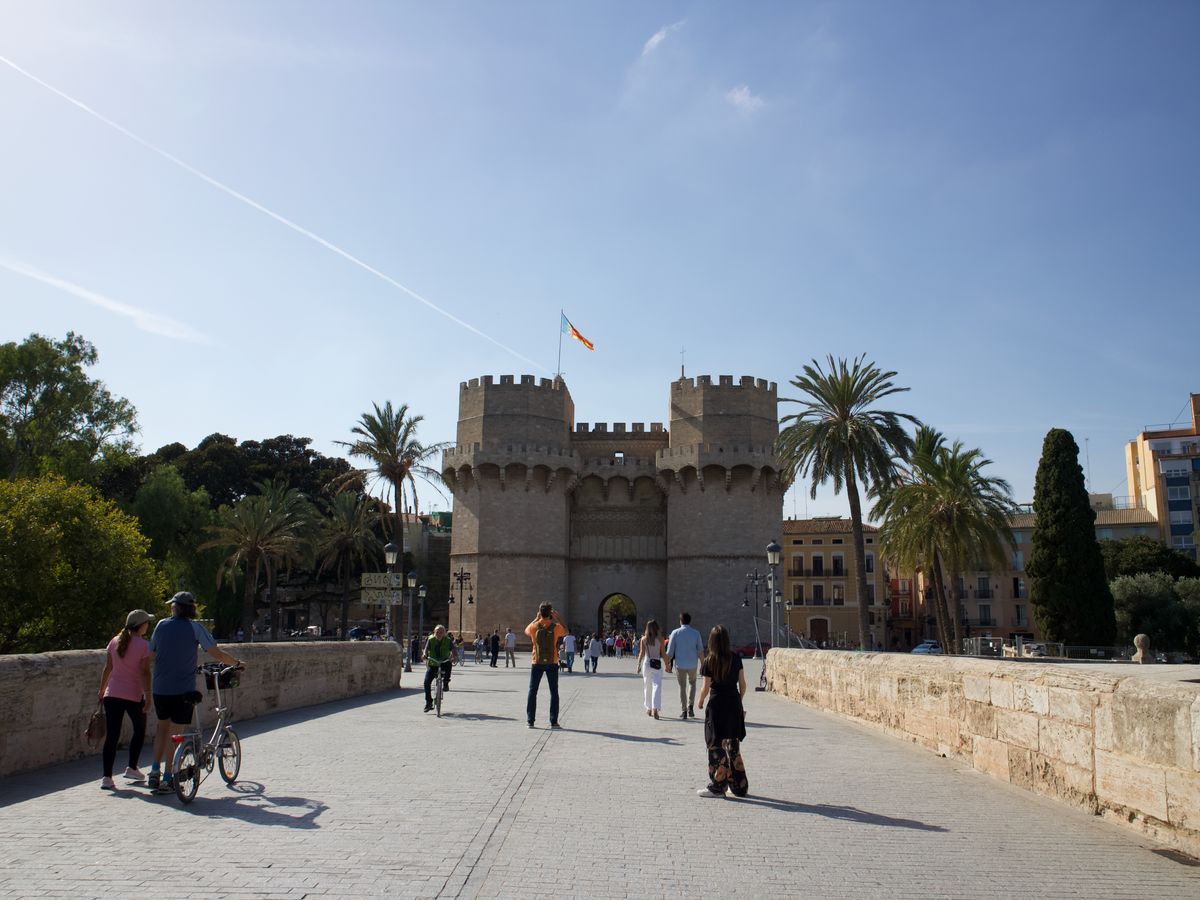
Serranos Towers. One of the old city gates and a perfect starting point. If they are open, go up: the views of the old town from the top give you your bearings at a glance (climb ~€2, free on Sundays and holidays).
Plaza de la Virgen and the Cathedral. The spiritual center of the city. The Cathedral houses a chalice that many identify as the Holy Grail. And if you still have the legs for it, climb the Miguelete, its bell tower: it’s 207 spiral steps, but the panoramic view of rooftops and domes is worth it.
Guide’s tip: go to the Miguelete first thing; at midday the stairs become a traffic jam.
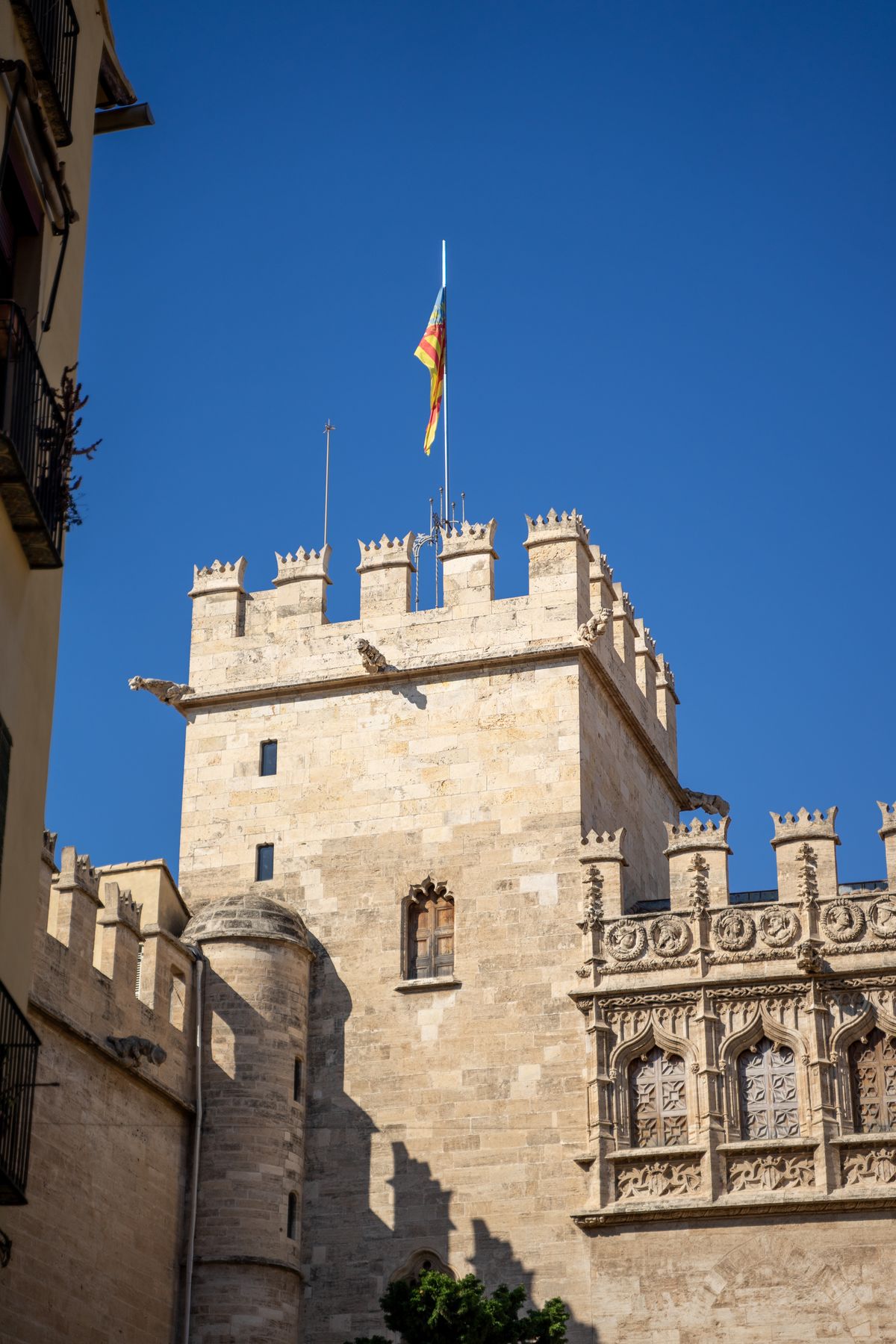
Silk Exchange (Lonja de la Seda). Civil Gothic architecture declared a UNESCO World Heritage Site. It looks like a cathedral, but it was the silk trade exchange. Check out the twisted columns in the main hall (entry ~€2, free on Sundays).
Central Market. One of the most beautiful modernist markets in Europe and the best spot for your first foodie stop: fruit, ham, a juice, or a full Valencian “almuerzo.”
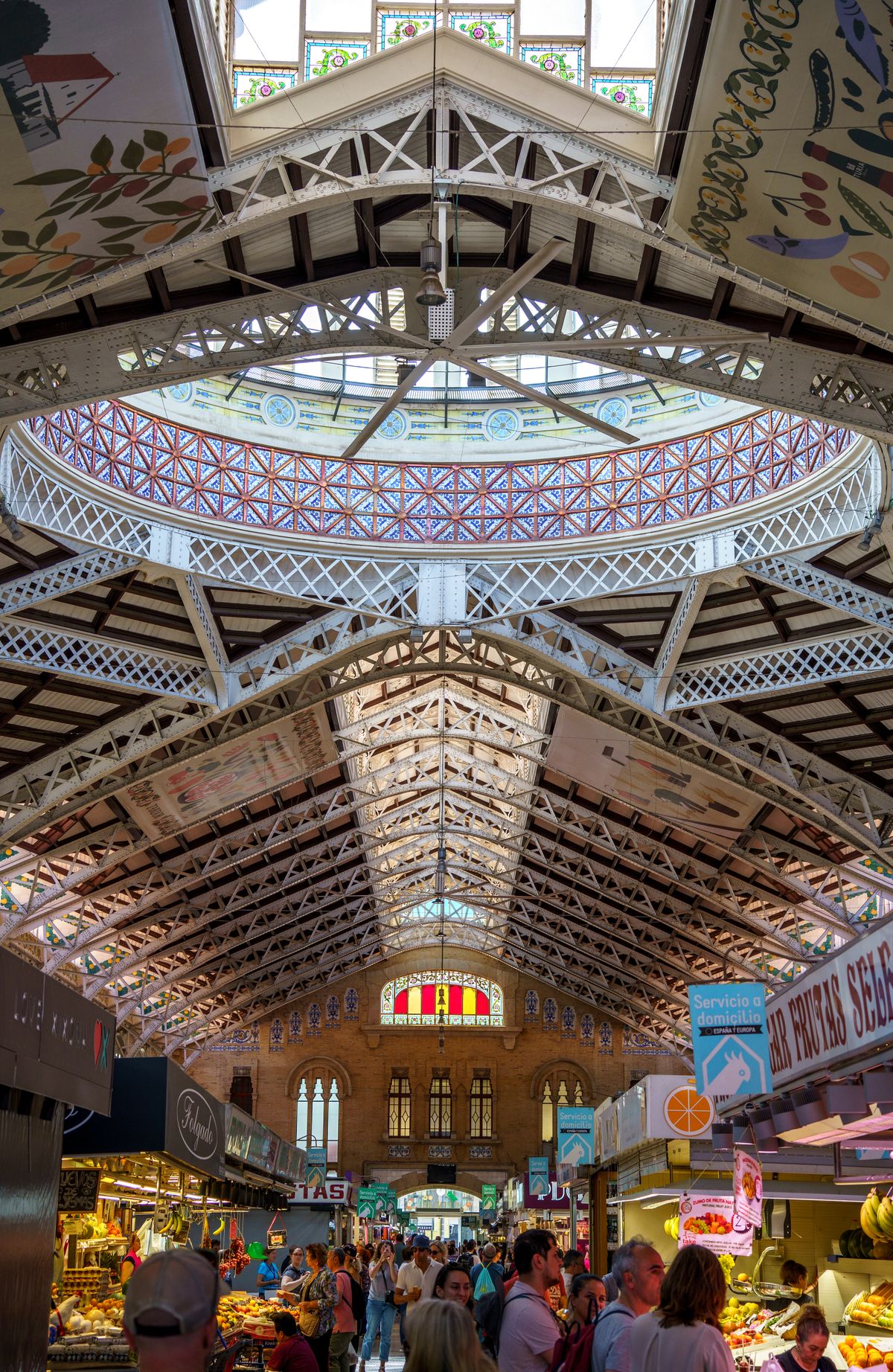
Guide’s tip: go inside even if you don’t buy anything. It’s the Valencia you can smell, hear, and taste.
El Carmen neighborhood and Quart Towers. Get lost for a while in the narrow streets of El Carmen—murals, squares, alleys—and end the morning at the Quart Towers, the other great medieval gate, with cannonball marks from the Napoleonic war still visible.
Midday: time to eat (well)
In Valencia, paella is eaten at midday, not at night: that’s the first local rule. The original Valencian paella has chicken, rabbit, and “garrofó” beans, not seafood.
You have two plans depending on what you fancy:
- Quick and authentic: grab a bite at the Central Market or head to the modernist Colón Market for an horchata with fartons.
- Taking it slow: a paella as tradition dictates, ideally by the sea (El Cabanyal, Malvarrosa) or in the Ruzafa neighborhood; if you have a car and time, in the Albufera, among the rice fields.
Guide’s tip: be wary of giant paella photos at the door and places with “tourist menus” in ten languages. Good paella is cooked to order and takes time.
Afternoon: from the Turia to the City of Arts
Head down to the Turia Garden and let the riverbed carry you east. You’ll pass under centuries-old bridges—including the flowery Flower Bridge—until you emerge into the city’s modern postcard view. Our 2h Complete Tour covers exactly this stretch of the Turia.
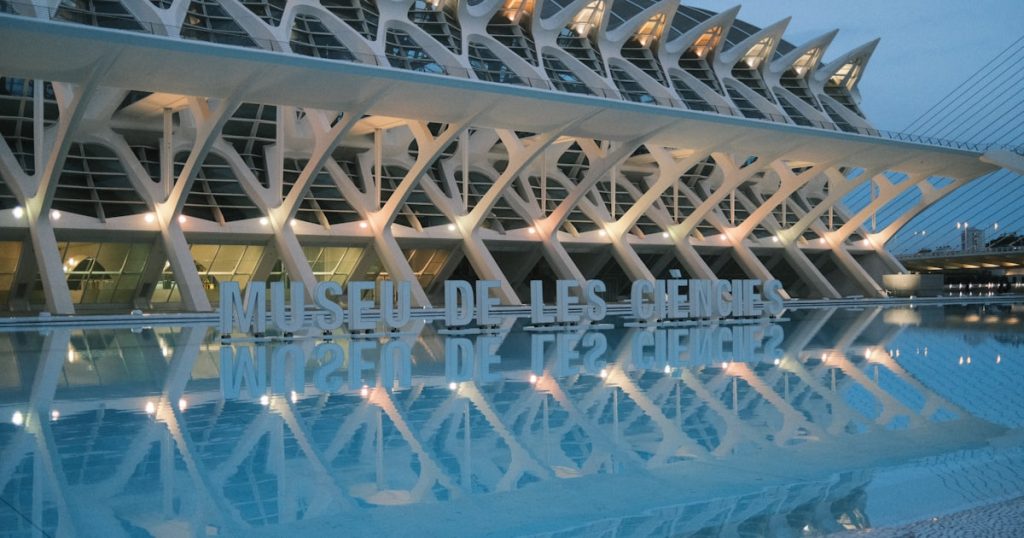
City of Arts and Sciences. The futuristic complex by Santiago Calatrava: the Hemisfèric, the Science Museum, the Palau de les Arts, and the star attraction, L’Oceanogràfic, the largest aquarium in Europe.
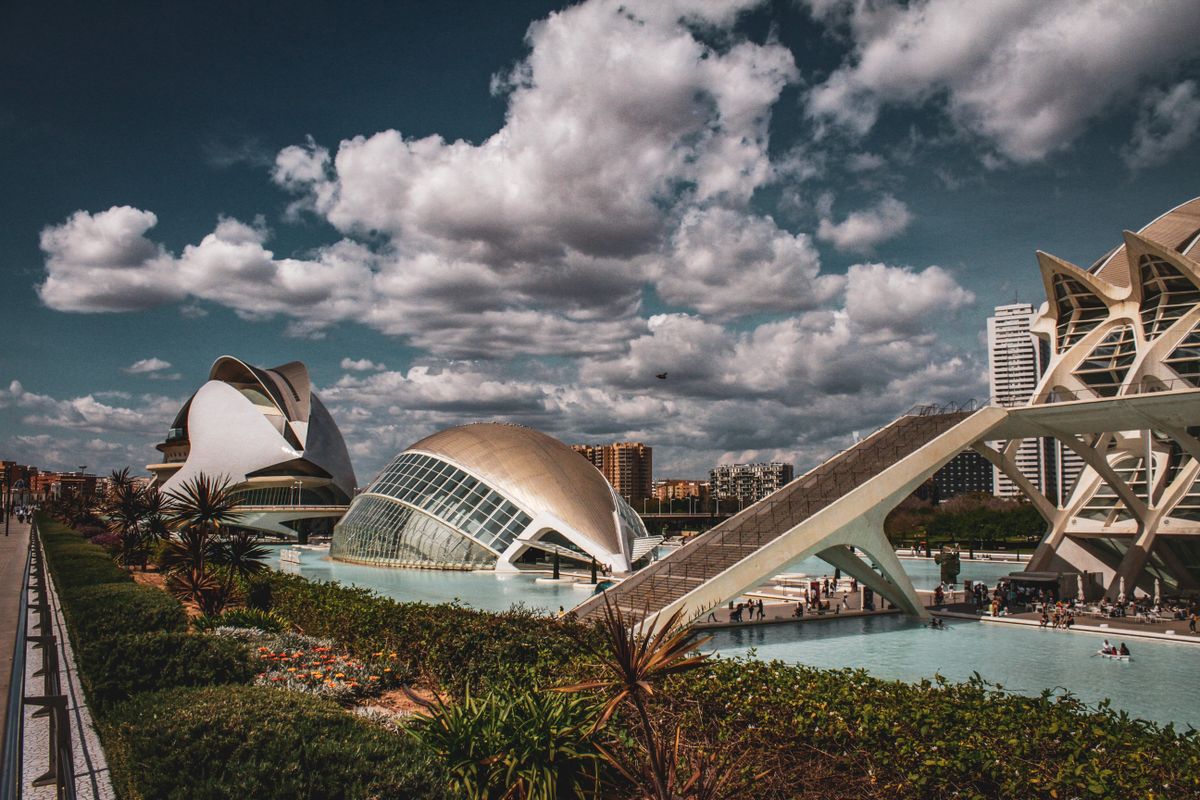
Guide’s tip: if you’re going into the Oceanogràfic (around €40), get your ticket online in advance; in high season the queue will eat up your afternoon. And if you just want the photos, the walk between the buildings and the ponds is already a free spectacle.
Late afternoon: sea and sunset
End the day at the Marina and Malvarrosa beach, with its promenade, or wander through El Cabanyal, the old fishermen’s quarter with tiled houses. It’s the best place for a paella or rice dish by the sea as the sun goes down.
If you have energy left and transport, the perfect finishing touch is a sunset in the Albufera, the rice field natural park on the outskirts, where paella was born and where you can take a boat ride.
Times and prices at a glance
To plan your day without surprises, here’s what to spend and pay at each key stop (estimated 2026 prices; confirm on official websites):
| Stop | Suggested time | Estimated entry |
|---|---|---|
| Serranos Towers | 20 min | ~€2 (free Sun. and holidays) |
| Cathedral + Holy Chalice | 45 min | ~€9 with audio guide |
| Miguelete (207 steps) | 30 min | ~€2 |
| Silk Exchange | 30 min | ~€2 (free Sundays) |
| Central Market | 30 min | Free |
| City of Arts (exterior) | 45-60 min | Free to walk around |
| L’Oceanogràfic | 2-3 h | ~€40 |
How to get around Valencia in a day without wasting time?
Here’s the honest “but” of this itinerary: the old town and the City of Arts are far apart, and linking those two areas plus the beach on foot or by bus can eat up a good part of your day. The old town is seen on foot (all pedestrianized); to jump to the sea or the City of Arts you have the EMT bus or metro (ticket ~€1.50). That jump between areas is exactly the problem a guided tuk tuk tour solves.
- Our 2h Complete Tour is practically this itinerary compressed: old town, Marina, Malvarrosa, El Cabanyal, and City of Arts in one go, with a local driver telling you about the city.
- If your day is shorter or you just want the historical heart, the 1h Historical Tour covers Serranos Towers, Plaza de la Virgen, Cathedral, Central Market, and Silk Exchange.
- Going as a group or want a custom route? The Private Tour. You can see them all in our tours in Valencia.
Our tuk tuks are 100% electric and enter pedestrian zones where a car can’t go, so you see more of the city in less time and without the noise. The meeting point is right in the old town, at C. de la Blanquería 3 (next to the Serranos Towers).
¿Vienes en crucero y tienes aún menos tiempo? Hemos escrito una guía específica: Escala de crucero en Valencia: qué hacer si solo tienes unas horas. Y si tu viaje sigue por el sur, también tenemos Qué ver en Sevilla en un día y Qué ver en Málaga en un día. Y más cerca, bajando por la costa, Qué ver en Alicante en un día.
Tips to make the most of your day in Valencia
- Best time: spring and autumn are ideal. In July and August, the midday heat (around 31°C) makes it wise to save the central hours for indoors, lunch, or the beach.
- Comfortable footwear. The old town is all cobblestones.
- Book online for anything with a queue (especially the Oceanogràfic).
- Opening hours: many small shops close at midday; use that time for lunch or a museum.
- Cash and card. In markets and neighborhood bars, cash is still welcome.
Frequently Asked Questions
Can you see Valencia in one day?
Yes, the essentials fit: old town in the morning, City of Arts in the afternoon, and beach at sunset. You won’t get into every museum, but you’ll get the feel of the city.
How many days do you need to see Valencia?
One day is enough for the essentials (old town + City of Arts + beach). With two or three days, you can add museums, the Albufera, and neighborhoods like Ruzafa or El Cabanyal at a slower pace.
Can you see the old town and the City of Arts on the same day?
Yes, they are connected by the Turia Garden. The only downside is the distance; it’s solved by walking through the park, by bike, or on a tuk tuk tour.
Is it worth climbing the Miguelete?
If you like views, yes. It’s 207 spiral steps and from the top you can understand the city at a glance. Go early to avoid the queue.
How much does it cost to enter the City of Arts and the Oceanogràfic?
Walking around the exterior complex is free. The Oceanogràfic is around €40; the Hemisfèric and the Science Museum have separate, cheaper tickets. Buy online to avoid the queue.
What is the best time to visit Valencia?
Spring and autumn are ideal. In July and August, the midday heat (around 31°C) makes it wise to save the central hours for indoors, lunch, or the beach.
Where and when to eat the best paella?
At midday, and ideally by the sea (El Cabanyal, Malvarrosa) or in the Albufera; in the center, Ruzafa has good rice dishes. Avoid places with huge photos at the door.
What is the best way to get around in a single day?
On foot within each area, and something with wheels to jump between the old town, the City of Arts, and the beach. That’s where a tuk tuk saves your day.
Book and forget about the logistics
A day in Valencia can go a long way if you don’t spend it at bus stops. We take care of the route and you keep the city; we are backed by more than 200 reviews with an average of 4.7 on Google.
👉 Book your tuk tuk tour in Valencia and choose between the 1h tour, the 2h complete tour, or a private one.
Guide written by the local WalkTuk Valencia team, who show the city by tuk tuk every day.