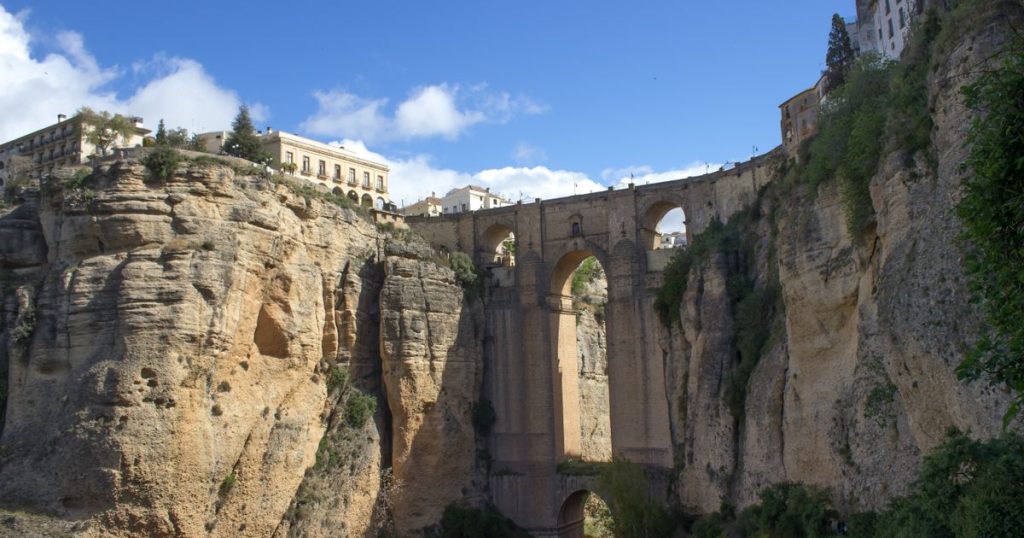
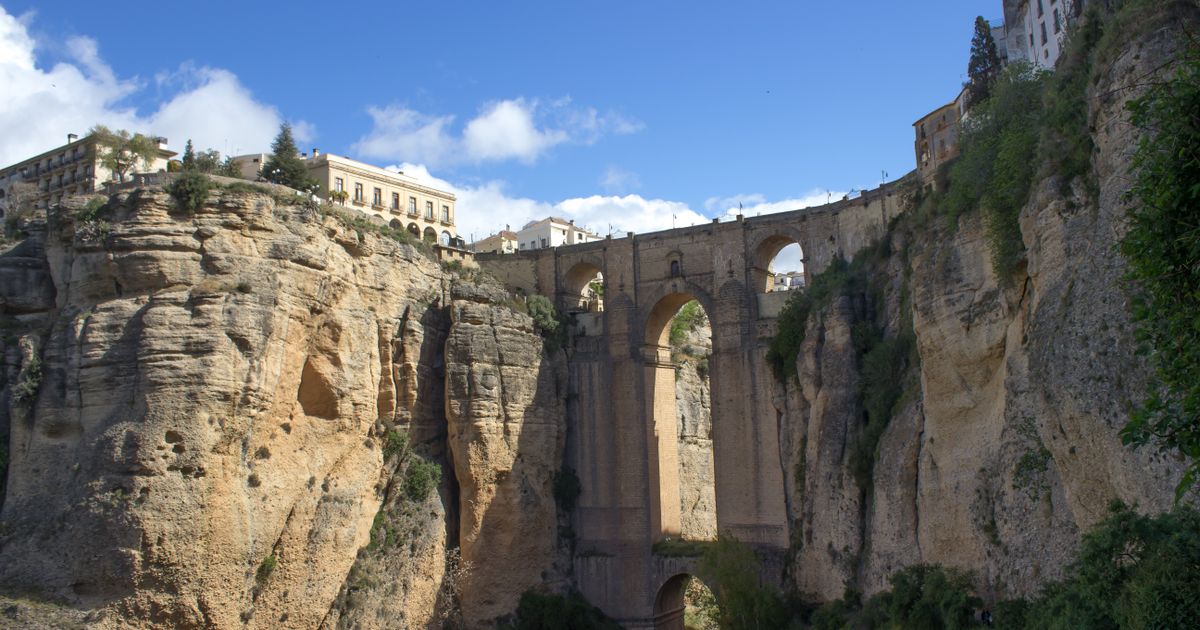
Ronda closed 2025 with two million visitors and over 412,000 overnight stays, according to the City Council, and overnight stays grew by 17 percent in one year. Almost everyone comes for the same thing: to look out over the Tajo from the Puente Nuevo, 98 meters above the river.
When deciding what to see in Ronda in one day, the problem isn’t the list. It’s the elevation change. The city is split by a gorge over 100 meters deep, and the best parts are on both sides and down at the bottom.
In short: start with the Puente Nuevo and the old town, go down to the river via the new Gorge Walk, eat in El Mercadillo, and finish at the Puente Nuevo viewpoints. Tickets: between €0 and €38.50.
What has changed in Ronda (and what you should know before you go)
If you’ve read other articles about Ronda, they might have told you things that are no longer true. Four new developments change the plan for the day:
- There is no train to Ronda. The line passing through the city is cut off and Renfe provides a bus service for the section between Antequera Santa Ana and Ronda. With the Railway Highway works, the closure will last until 2027.
- The Tajo Gorge Walk is complete as of September 16, 2026: almost a kilometer-long route through the bottom of the Tajo, to the base of the Puente Nuevo and beyond. You must book in advance.
- The Puente Nuevo is closed to outside cars. Since August 1, 2025, only vehicles registered in Ronda can cross it, with camera enforcement.
- Mondragón Palace, which houses the Ronda Museum, reopened its renovated rooms and is renovating the inner courtyard in 2026: some areas may be under construction.
Is one day enough to see Ronda?
Yes. Ronda’s center is small and everything important is within walking distance. What doesn’t fit in one day is the Serranía: the surrounding white villages are a separate excursion.
What you should understand before starting is that Ronda has three levels:
- El Mercadillo, the modern side: Plaza de España, the Bullring, and the Alameda del Tajo.
- La Ciudad, the old town, on the other side of the Puente Nuevo: Santa María la Mayor, Mondragón Palace, and the Almocábar Gate.
- The bottom of the Tajo, by the Guadalevín river: the Arab Baths and the Old and Arab bridges.
Going down is easy. What eats up the day is coming back up. That’s why this itinerary goes down only once, at midday, and comes back up just before lunch:
| Time | Stop | Entrance | Time |
|---|---|---|---|
| 10:00 | Puente Nuevo and its Interpretation Center | Municipal pass €12 | 30 min |
| 10:30 | Santa María la Mayor | €4.50 with audio guide | 40 min |
| 11:15 | Almocábar Gate | Free | 20 min |
| 11:45 | Mondragón Palace (Ronda Museum) | Pass | 45 min |
| 12:30 | Tajo Gorge Walk | €12, online booking | 1 h |
| 13:30 | Arab Baths | Pass | 30 min |
| 14:00 | Climb to the upper part and lunch | — | 2 h |
| 16:00 | Bullring | €10 (€12 with audio guide) | 1 h |
| 17:15 | Alameda del Tajo | Free | 30 min |
| 18:00 | Aldehuela Viewpoint and views of Puente Nuevo | Free | 30 min |
Visit times are our own estimates, not official data. Prices and schedules are from each monument’s website, consulted in September 2026, except for the price of the House of the Moorish King and the municipal monument schedules, which are only published in the latest Municipal Tourism Office table from March 2024.
Before continuing, check which day you’re coming. Ronda has one advantage: it doesn’t close on Mondays. What changes is the schedule:
| Day | What changes |
|---|---|
| Mondays and Saturdays | The Arab Baths and municipal monuments have split hours: from 10:00 AM to 2:00 PM and from 3:00 PM to 6:00 PM |
| Sundays and holidays | Arab Baths and municipal monuments, only from 10:00 AM to 3:00 PM. In October and November, Monday, October 12 and Monday, November 2 are holidays |
| From November | The Bullring and Santa María la Mayor close at 6:00 PM, as do the Arab Baths from Tuesday to Friday. The Gorge Walk has winter hours, from 9:00 AM to 5:00 PM, and its website doesn’t say which month it starts: if you come in November, check when booking |
If you come on a Sunday or holiday, the itinerary works as is if you start at 10:00 AM: everything included in the pass and the Arab Baths happens before 3:00 PM, which is when they close. What you can’t do is leave the old town for the afternoon. In the afternoon, the Bullring, Santa María, and the House of the Moorish King remain open.
And on Mondays and Saturdays, watch out for the Arab Baths: they close from 2:00 PM to 3:00 PM. If the Gorge Walk takes longer than expected, enter before 1:30 PM or leave them for 3:00 PM.
Morning: Puente Nuevo and the old town
Start at the beginning. The Puente Nuevo is 98 meters high and took over 40 years to build: work started in 1751 and finished in May 1793. There was a previous bridge from 1735 that collapsed six years later, killing about 50 people.
Inside the bridge itself, there is an Interpretation Center. It’s included in the municipal tourist pass, which costs €12 (€9 reduced) and also includes the Giant’s House, the Arab Baths, and Mondragón Palace, plus the Santo Domingo Convent and the Joaquín Peinado Museum as a courtesy, subject to availability.
Santa María la Mayor
Crossing the bridge, you reach La Ciudad. Its main church, Santa María la Mayor, was built over the former main mosque and still preserves the mihrab arch. It costs €4.50 with audio guide and in October it opens from 10:00 AM to 7:00 PM; in November, until 6:00 PM.
Almocábar Gate and Mondragón Palace
Continue through the old town to the Almocábar Gate, one of the gates of the old city wall. It can be seen without a ticket.
Head back toward the edge of the Tajo for Mondragón Palace, home of the Ronda Museum, with its renovated rooms. Very close by, in Plaza de María Auxiliadora, at the end of the old town balconies, the Gorge Walk begins.
Midday: going down to the bottom of the Tajo
This is the part that sets Ronda apart from any other city. The Arab Baths and the Old and Arab bridges can be reached by walking through the neighborhood. What requires a ticket is walking along the bottom of the gorge, and there are two ways to do it:
| Gorge Walk | Water Mine at the House of the Moorish King | |
|---|---|---|
| Price | €12, book on the official Gorge Walk website | €10 according to the municipal table from March 2024; tickets only at the box office |
| Hours | 10:00 AM-8:00 PM in spring and autumn; 9:00 AM-5:00 PM in winter (official schedule) | 10:00 AM-8:00 PM every day, from October to April (house website) |
| What it is | Almost a kilometer-long route through the bottom of the Tajo, to the base of the Puente Nuevo and beyond | A 14th-century water mine excavated in a crack in the Tajo down to the river, and a 1912 garden |
| Where it ends | At the old San Miguel Hermitage, next to the Arab Baths | At river level, at the bottom of the mine |
| To keep in mind | Children under 8, strollers, wheelchairs, and animals are not allowed | The house is under restoration: the garden and the mine can be visited |
The Gorge Walk, complete since September
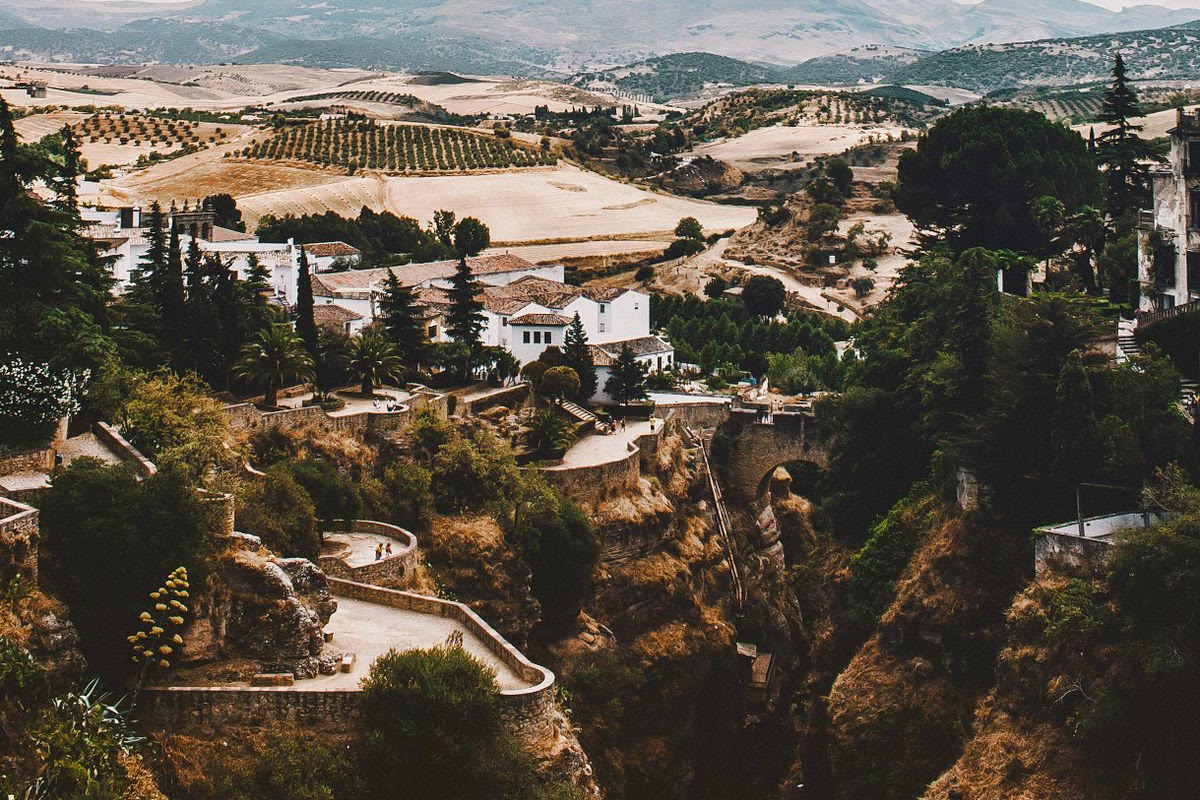
The first phase opened in 2024 and reached the base of the Puente Nuevo. On its own, it already received over 160,000 visits a year. On September 16, 2026, the second phase opened, continuing through the heart of the Tajo to the old San Miguel Hermitage in the Padre Jesús neighborhood.
This changes the itinerary: the exit is next to the Arab Baths, so you go down through the Gorge Walk and continue the visit below without retracing your steps. Of the Ronda itineraries we’ve reviewed, none yet include the full route, and some still only describe the first section.
Two rules worth knowing before booking, according to the official website: you must wear hiking shoes, and if it rains, umbrellas are not allowed; a raincoat is mandatory. In autumn, both things matter.
The House of the Moorish King, the other way down
If you haven’t booked the Gorge Walk, the other way to get to the bottom of the Tajo is the House of the Moorish King. It has a three-tiered garden designed by the Frenchman Forestier in 1912, his first recognized work in Spain, and a Moorish-era water mine that goes down through a crack in the rock to the river.
According to chroniclers, in 1485 a Moorish traitor revealed the secret of that mine to the Castilians, which was the city’s main water source, and this precipitated Ronda’s surrender. The house is under restoration: the garden and the mine can be visited.
The Arab Baths and the climb back up
Below are the Arab Baths: €4.50 separately (€3 reduced), or included in the pass. From Tuesday to Friday they open from 9:30 AM to 7:00 PM in October and until 6:00 PM in November; Mondays and Saturdays, from 10:00 AM to 2:00 PM and from 3:00 PM to 6:00 PM.
And now it’s time to walk back up to the upper part. You’ll arrive for lunch with an appetite, which is exactly the idea.
Afternoon: the Bullring and the Alameda del Tajo
After lunch, the Real Maestranza Bullring: €10, or €12 with audio guide. It opens every day, from 10:00 AM to 7:00 PM in October and from 10:00 AM to 6:00 PM from November to February. It dates from 1785, and the visit includes the ring and the museum.
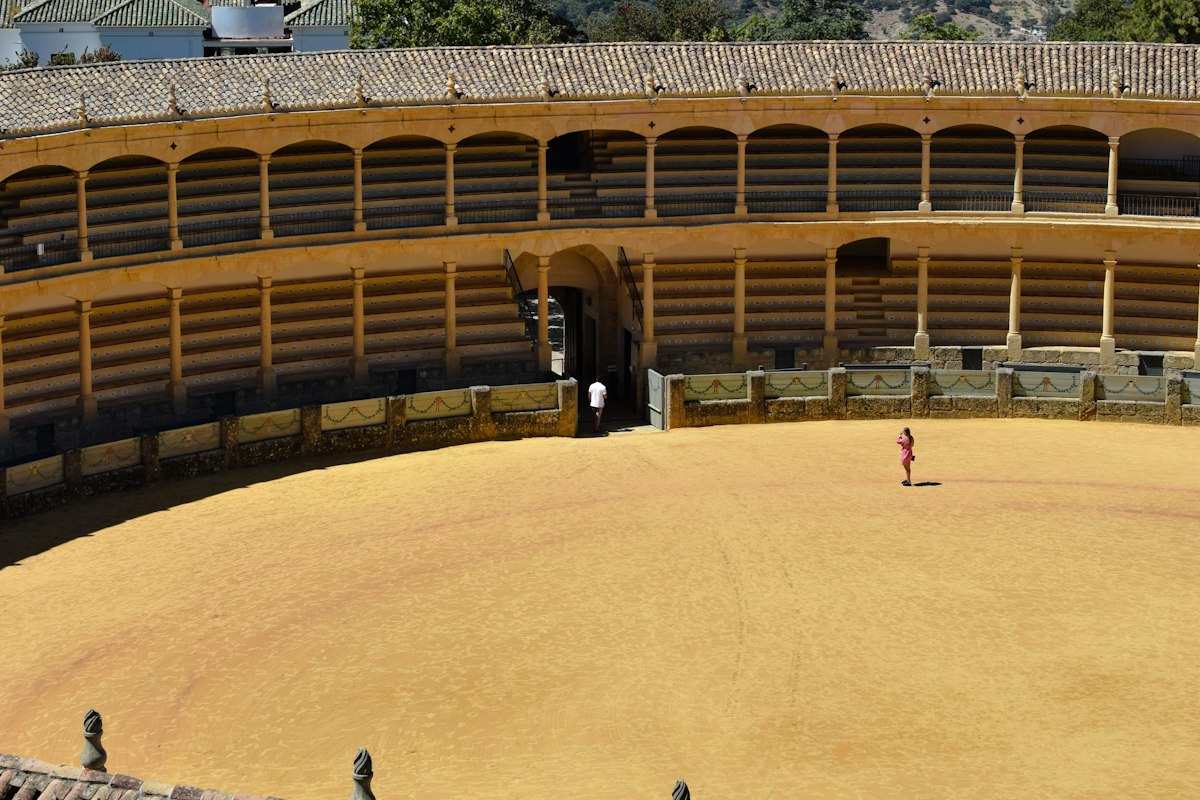
From there, the Alameda del Tajo is just a step away: a tree-lined walk that ends at the viewpoint overhanging the cliff that everyone knows as the Balcón del Coño, with views of the mountains.
Late afternoon: the Puente Nuevo from the viewpoints
To finish, return to the Puente Nuevo. Aldehuela Viewpoint, next to the Santo Domingo convent, is one of the best places to see it from above. The Cuenca Gardens, in El Mercadillo, are the other classic view, but we haven’t found their published schedule: if you go late, check first.
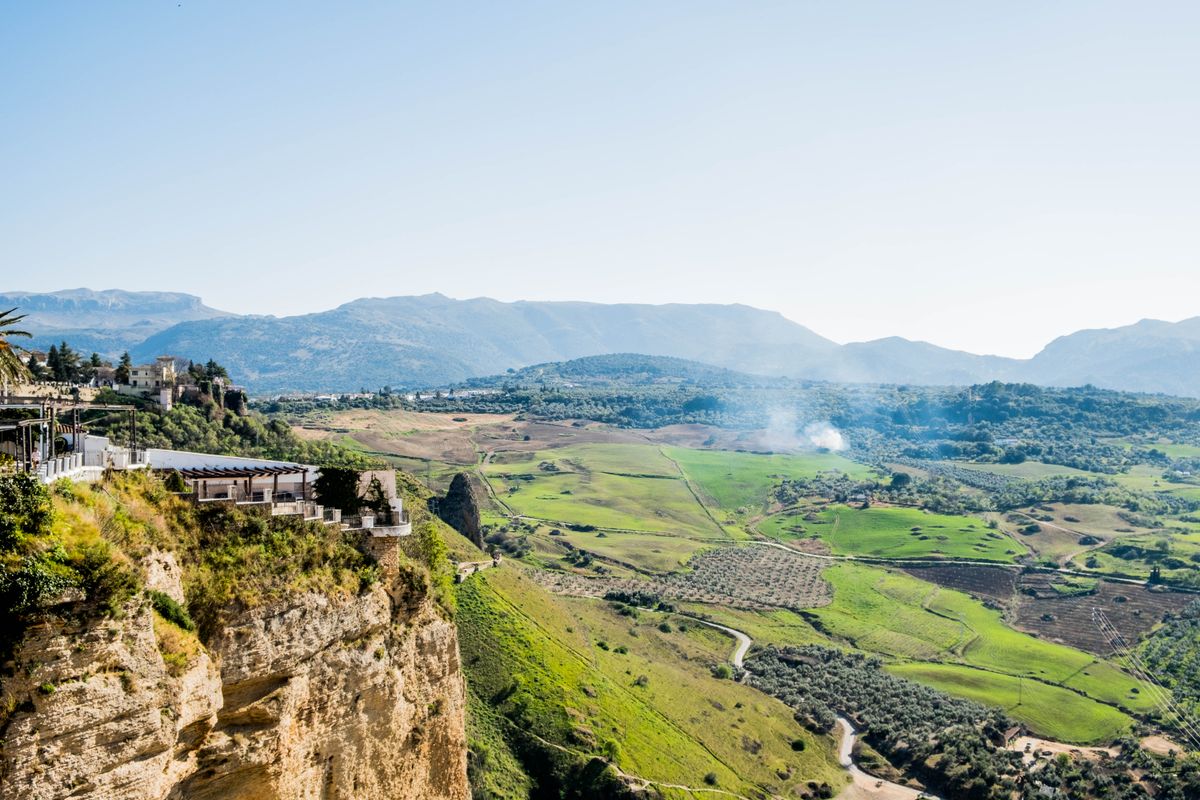
If you went down the Gorge Walk in the morning, you already have the other photo—the bridge seen from the bottom. With both, you have both faces of the Tajo.
How much does it cost to see Ronda in one day?
Between €0 and €38.50 per person in tickets, depending on what you choose, or €40.50 if you take the Bullring audio guide. Here is the breakdown:
| Plan | What’s included | Total in tickets |
|---|---|---|
| Minimum | Puente Nuevo from the outside, viewpoints, Alameda, Almocábar, and the Old and Arab bridges | €0 |
| Pass | Municipal pass: Puente Nuevo Center, Giant’s House, Arab Baths, and Mondragón | €12 |
| Balanced | Pass + Bullring + Santa María la Mayor | €26.50 |
| Complete | The above + Gorge Walk | €38.50 |
A note about the pass: it does not include the Bullring, Santa María, the House of the Moorish King, or the Gorge Walk. It costs €12 for four visits and two courtesy ones; the single entry for the Arab Baths alone is already €4.50.
If you’re coming on an excursion from Malaga or the Costa del Sol
If you’re doing Ronda in a day from Malaga or the Costa del Sol, check how many hours you’ll have in the city:
| Time in Ronda | Plan |
|---|---|
| 3-4 hours | Puente Nuevo, Santa María, Bullring, and Alameda del Tajo. Without going down to the bottom of the Tajo |
| 5-6 hours | The above + Gorge Walk and Arab Baths, with the ticket bought before leaving |
| Full day | The complete itinerary above, with Mondragón, the Gorge Walk (or the House of the Moorish King), and the viewpoints |
With 3-4 hours, don’t go down to the Tajo: between the descent, the visit, and the climb back up, a good part of your time will be gone. With 5-6, yes, but book the Gorge Walk before leaving: the ticket is bought online.
And if you’re staying in Malaga, for another day you have what to see in Malaga in one day, with the same hour-by-hour format.
How to get to Ronda in 2026, now that there is no train
- By train: until 2027, no. Renfe covers the section between Antequera Santa Ana and Ronda by bus, with the rest of the trip by train.
- By bus from Malaga: Damas operates the Malaga-Ronda line, and Avanza, the L-304, which goes along the coast via Torremolinos and San Pedro de Alcántara. The schedule published by Damas is for March to June 2026: confirm the autumn one on their website before going.
- By car: Ronda is 91.5 km from Malaga, according to the Institute of Statistics and Cartography of Andalusia.
- When arriving by car: park in El Mercadillo. The Puente Nuevo can only be crossed by vehicles registered in Ronda and there are cameras.
Within Ronda, almost everything is done on foot. The only question is how many times you want to go down and up the Tajo.
Ronda in autumn: cooler than you think
Ronda is at 721 meters altitude and inland, and it shows. According to a study by two geographers from the University of Granada published in the journal Takurunna, its average annual temperature is 15.1°C. Malaga’s, according to AEMET, is 18.5°C: more than a three-degree difference.
AEMET does not publish normal climate values for Ronda, so be wary of websites that give you an exact average maximum. The practical side: with an average of more than three degrees less than Malaga, expect cool mornings and nights in autumn, and bring a warm layer even if you leave the coast in short sleeves.
And if it rains, remember the Gorge Walk rule: raincoat, no umbrella.
What to eat in Ronda (and what isn’t from here)
Ronda’s cuisine is from the mountains, not the coast. According to the Ministry’s Carta de España, in addition to the usual Andalusian dishes, the following are typical of Ronda’s gastronomy:
- Simple stews: tomato and garlic soups, chickpea or lentil stews, and Ronda-style pumpkins.
- Game: partridge ‘al tajo’ and Ronda-style rabbit.
- Mountain meats: lamb stew, ‘cochifrito’ of young lamb, and loin stuffed with pine nuts.
The nuance: you’ll see oxtail (rabo de toro) on many menus in Ronda, and it fits the city of the Bullring, but the Ministry itself lists it as a dish of Cordovan origin, spread throughout Andalusia.
To drink, look for the Serranía de Ronda label: it’s the sub-zone of the DO Sierras de Málaga, and it is only carried by wines made in the Serranía with 100% local grapes.
How to see Ronda without walking up the Tajo
This is where we come in. The itinerary above goes down and up the Tajo, and links sections between El Mercadillo, La Ciudad, and the viewpoints that, in one day, add up.
We are not a sightseeing tour company. We are electric tuk tuk transport with a host driver: we take you from one point to another, point out what you’re seeing, and recommend where to continue on your own.
- 70-minute tuk tuk tour: from Plaza de España and the Puente Nuevo to the Bullring, the Alameda del Tajo, Santa María la Mayor, Mondragón Palace, the Almocábar Gate, and the descent to the Arab Baths and the Old Bridge.
- Private tour: over an hour, just for your group and at your own pace, with stops for photos.
- All our tours in Ronda, with departure points and schedules.
Shall we book it? Check availability in Ronda or call +34 672 86 95 74.
Other cities, same format
If Ronda is a stop on a longer trip, we have a one-day plan for other cities:
- What to see in Malaga in one day — Alcazaba, Cathedral, Picasso, and Gibralfaro, hour by hour.
- What to see in Seville in one day — with a plan to dodge the heat.
- What to see in Alicante in one day — the castle, Santa Cruz, and the Explanada.
- What to see in Valencia in 1 day — old town, City of Arts and Sciences, and beach.
Frequently Asked Questions
Can you see Ronda in one day?
Yes. Ronda’s center is small: in one day you can fit in the Puente Nuevo, the old town of La Ciudad, the descent to the river via the Gorge Walk, the Arab Baths, and the Bullring. What doesn’t fit is the Serranía: the surrounding white villages need another day.
How much does it cost to enter the Puente Nuevo?
Crossing it and seeing it from the viewpoints is free. Inside the bridge there is an Interpretation Center that is paid for separately and is included in the €12 municipal tourist pass, along with the Arab Baths, Mondragón Palace, and the Giant’s House.
What can you see for free in Ronda?
The Puente Nuevo from the outside, the Alameda del Tajo, the Aldehuela Viewpoint, the Almocábar Gate, and the Old and Arab bridges, which you can walk down to through the neighborhood. With that, you already have great views of the Tajo without paying for a ticket.
Can you go from Malaga to Ronda by train?
In 2026, not directly. The line passing through Ronda is interrupted and Renfe covers the section between Antequera Santa Ana and Ronda by bus, with closures planned until 2027 due to works. The alternative is the Damas bus or the Avanza L-304 line, which goes along the coast.
Do you have to book the Tajo Gorge Walk?
Yes, the ticket is bought online and costs €12. The full route, open since September 16, 2026, is almost a kilometer long and ends next to the Arab Baths. Children under 8, strollers, wheelchairs, and animals are not allowed. In autumn it opens from 10:00 AM to 8:00 PM and in winter from 9:00 AM to 5:00 PM.
Is the House of the Moorish King worth it?
For the garden and the mine, yes. The garden was designed by the Frenchman Forestier in 1912 and the 14th-century water mine goes down through a crack in the Tajo to the river. The house is under restoration and tickets are sold only at the box office. It’s the alternative if you haven’t booked the Gorge Walk.
Can you cross the Puente Nuevo by car?
Only if the car is tax-registered in Ronda. Since August 1, 2025, the axis between Virgen de la Paz and Armiñán, which includes the Puente Nuevo, has been regulated with cameras. If you arrive by car, park in El Mercadillo and cross on foot.
What is the weather like in Ronda in autumn?
Cooler than on the coast. Ronda is at 721 meters altitude and its average annual temperature is 15.1°C, according to a study by the University of Granada, compared to 18.5°C in Malaga. Expect cool mornings and nights and bring a warm layer.
What is typical to eat in Ronda?
Mountain cuisine: tomato and garlic soups, Ronda-style rabbit, partridge ‘al tajo’, lamb stew, and ‘cochifrito’ of young lamb. Oxtail is common, but it’s of Cordovan origin. For wine, the Serranía de Ronda sub-zone of the DO Sierras de Málaga.
What is the best viewpoint for the Puente Nuevo?
From above, the Aldehuela Viewpoint, next to the Santo Domingo convent, and the Cuenca Gardens in El Mercadillo. From below, the Gorge Walk, which reaches the base of the bridge.
Written by Pep Mora, from WalkTuk. Prices and schedules consulted on the official websites of each monument and operator in September 2026, except where another date is indicated; confirm them before your visit, as they change.