
To know what to see in Seville in 2 days, it’s worth starting with a figure: in 2025, the average hotel stay in the province was 2.05 nights, according to the Provincial Council’s tourism report, based on provisional INE data. So the usual plan is to stay two nights, which gives you two full days, not just a single day.
Any itinerary covers the first day: the Cathedral, the Alcázar, and the Plaza de España. The problem is the second day. What’s left (the Macarena, the Cartuja, Triana itself, and the palaces) is spread around the city center: on foot, the second day adds up to nearly nine kilometers, and several of these sites are closed on Mondays.
In short: day 1 covers the monuments; day 2 covers the north and the river in the morning (Macarena, Cartuja, and Triana) and two palaces in the afternoon, chosen depending on the day of the week. Second-day admission fees: between €0 and €30.50, plus the Cartuja.
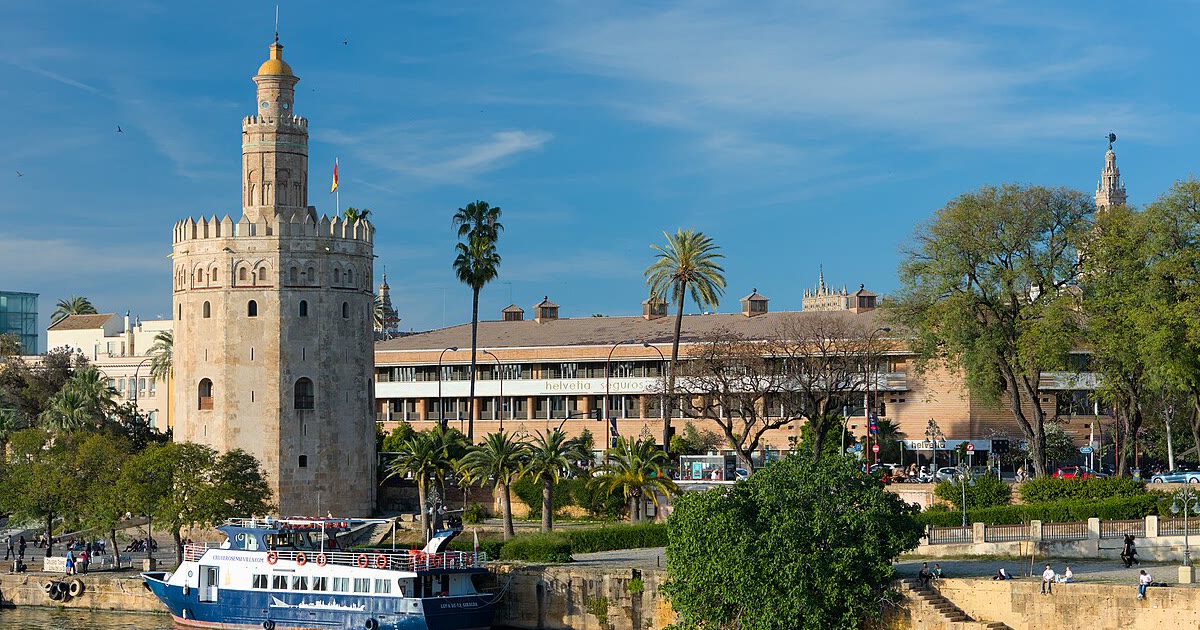

What to see in Seville in 2 days, at a glance
| Time slot | Day 1: the monuments | Day 2: the north, the river, and the palaces |
|---|---|---|
| Morning | Cathedral, Giralda, and the Santa Cruz quarter | Basilica and walls of the Macarena; Monastery of the Cartuja |
| Midday | Real Alcázar | Triana up close: Triana Market and the Ceramics Center |
| Afternoon | Plaza de España and Parque de María Luisa | Palacio de las Dueñas and Casa de Pilatos |
| As the day winds down | Triana, the river, and the Setas | Alameda de Hércules, or the riverside between the Torre del Oro and the Maestranza |
The order of the second day isn’t random: the long stretches (the Cartuja is on the other side of the river) are done in the morning, and the afternoon returns to the center, where the two palaces are just ten minutes’ walk from each other.
Day 1: the essentials, in brief
The first day follows our one-day Seville itinerary, which breaks it down hour by hour. Here’s the essential part, with the two tickets worth buying in advance:
- Cathedral and Giralda: €13 online or €14 at the ticket office. Monday to Saturday, 10:45 AM to 6:00 PM, with the ticket office open until 5:00 PM; Sundays, 2:30 PM to 7:00 PM. On Sundays there’s free admission, according to the liturgical calendar, from 5:00 PM at the Puerta del Príncipe ticket office, with limited capacity.
- Real Alcázar: €15.50. From October to March it opens from 9:30 AM to 5:00 PM.
- In the afternoon, the Plaza de España and the Parque de María Luisa, free. And at sunset, Triana and the riverbank.
Hold on to your Alcázar ticket. It comes in handy on the second day: if you show it, the Triana Ceramics Center is free.
Day 2, hour by hour
| Time | Stop | Entrance | Time |
|---|---|---|---|
| 9:30 AM | Basilica of the Macarena and its Museum-Treasury | Museum €3.50 | 45 min |
| 10:15 AM | Walls and Arch of the Macarena | Free | 10 min |
| 11:00 AM | Monastery of the Cartuja (CAAC) | Check their website | 1 h |
| 12:30 PM | Triana Market, and lunch | — | 1 h 30 min |
| 2:15 PM | Triana Ceramics Center | €2.10 (free with Alcázar ticket) | 45 min |
| 3:45 PM | Palacio de las Dueñas | €15 | 45 min |
| 4:45 PM | Casa de Pilatos | €12 | 1 h |
| 6:00 PM | Alameda de Hércules, for tapas | — | — |
Visit times are our own estimates, not official figures; there’s more than half an hour on foot between the Macarena and the Cartuja. Prices and hours from each monument’s website, checked on November 2, 2026, for the November-to-March season.
This order works from Tuesday to Saturday. If your second day falls on a Monday or Sunday, check the day-of-the-week table first, as things change quite a bit. If it falls on a Friday, check it too: there’s a free palace at 10:00 AM.
Day 2 in the morning: the Macarena and its walls
Start in the north. The Basilica of the Macarena is open Monday to Saturday from 8:00 AM to 2:00 PM and 5:00 PM to 9:00 PM; Sundays and holidays, from 9:30 AM. Next door is its Museum-Treasury, which costs €3.50 and is open in the morning from 9:00 AM to 2:00 PM (from 9:30 AM on Sundays).
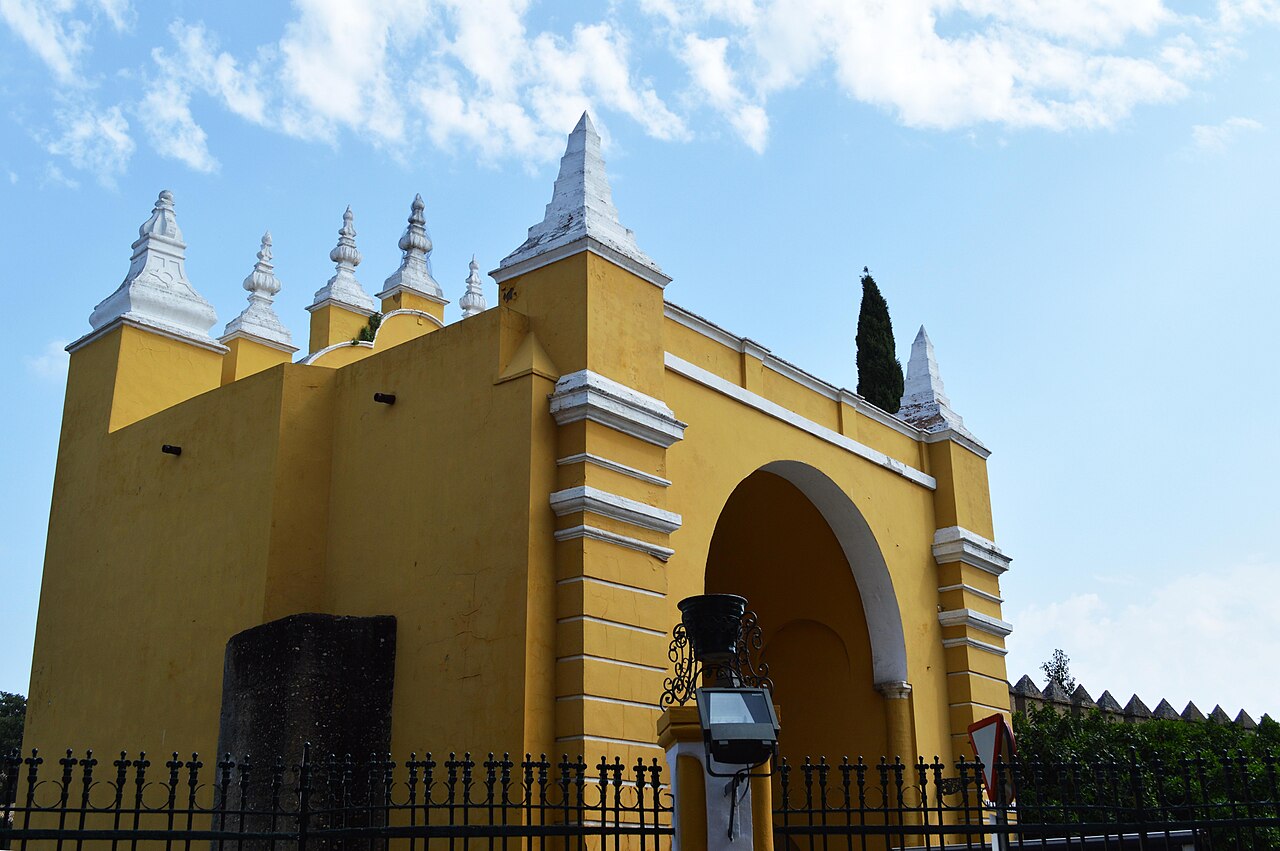

Across from it, the Arch of the Macarena and a stretch of the old city wall, both visible from the street and free to view. If you fancy a coffee before moving on, the Alameda de Hércules is about 720 meters away, around a ten-minute walk; but save it for the evening, when it really comes alive.
Day 2, mid-morning: the Cartuja, across the river
The former Monastery of Santa María de las Cuevas, the Cartuja, is now home to the Andalusian Center for Contemporary Art (CAAC). According to the Junta’s cultural calendar, it’s open Tuesday to Saturday from 11:00 AM to 9:00 PM, and Sundays and holidays from 10:00 AM to 3:30 PM; closed on Mondays.
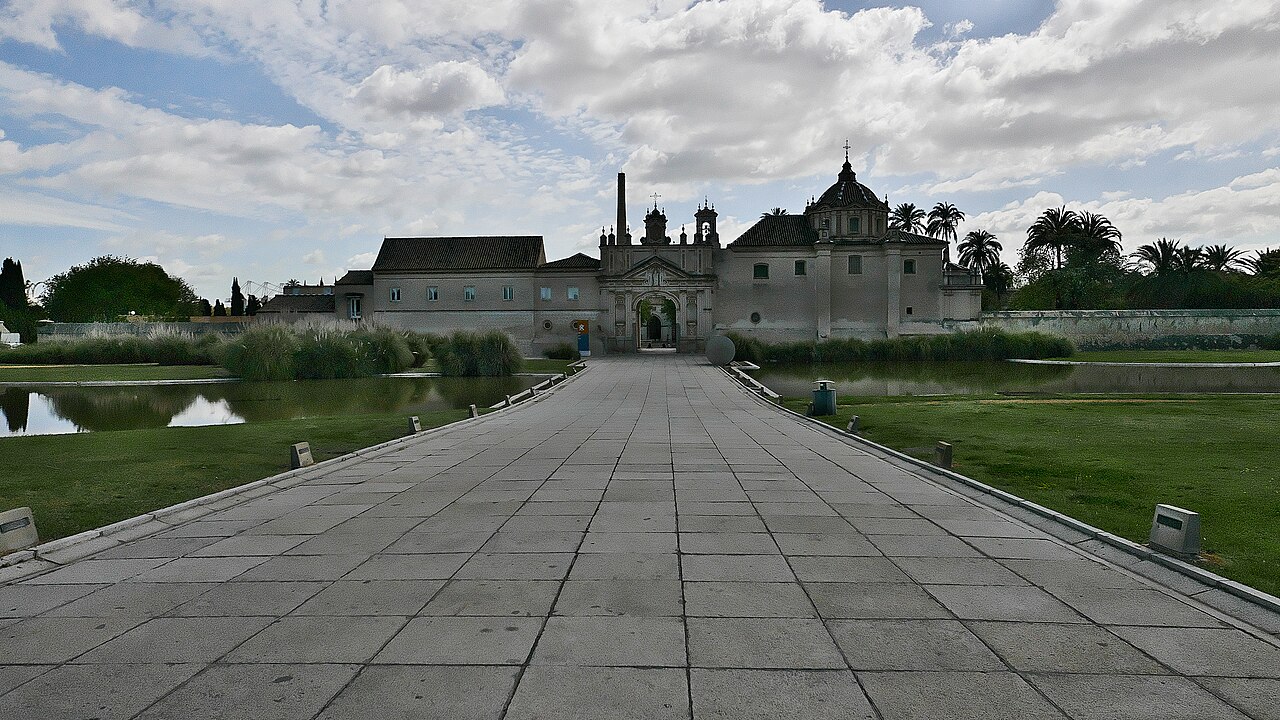

We’re not giving a price: the only official rate we found dates from 2018-2019, and we won’t publish it as current. Check the CAAC website before you go.
The Cartuja is the most demanding stretch on foot. From the Macarena it’s about 2.5 km, more than half an hour’s walk by our calculation using OpenStreetMap, and from the Cartuja to the Triana Market there’s another 1.8 km. That’s why it comes in the morning, and it’s the stretch most worth doing by bus, taxi, or tuk tuk.
Day 2 at midday: Triana up close
On the first day you pass through Triana at sunset. On the second, it’s time to go inside. The Triana Market has its stalls open Monday to Saturday from 9:00 AM to 2:30 PM, and its bars until 5:00 PM, making it the natural choice for lunch. On Sundays and holidays the stalls are closed; on Sundays, the bars are open from 10:00 AM to 5:00 PM.
A heads-up: if you see the Castillo de San Jorge recommended, next to the market, keep in mind that, according to Visita Sevilla, the City Council’s tourism website, the archaeological site is closed; only the lobby operates, as a tourist information office, from 9:30 AM to 2:30 PM.
After lunch, the Triana Ceramics Center: €2.10, or free if you show your general Real Alcázar ticket. Open Tuesday to Sunday from 10:00 AM to 8:00 PM, closed on Mondays.
Day 2 in the afternoon: two palaces (choose based on the day)
The afternoon returns to the center, where the palaces are. All of them are worth visiting, and what decides which one fits into your afternoon is the day of the week:
| Palace | Entrance | Winter hours | When it’s free |
|---|---|---|---|
| Casa de Pilatos | €12 (the upper floor, €6 more) | Every day, 9:00 AM to 6:00 PM | Children up to 11, with an adult |
| Palacio de las Dueñas | €15 | 10:00 AM to 6:00 PM; last entry 45 min before closing | Non-holiday Mondays from 4:00 PM, with booking on their website |
| Palacio de Lebrija | €15 | Every day, 10:00 AM to 6:00 PM | Fridays at 10:00 AM, ground floor, no booking needed, limited capacity |
| Hospital de los Venerables | €12 with audio guide | Monday to Saturday 10:00 AM to 7:00 PM; Sunday 10:00 AM to 3:00 PM | No free days published; Mondays 3:00 PM to 7:00 PM, “BIC hours” with booking |
Las Dueñas, early afternoon
Start with Palacio de las Dueñas, since last entry is at 5:15 PM, 45 minutes before closing. If your second day falls on a non-holiday Monday, admission is free from 4:00 PM, but you need to book on their website, and once tickets run out, they won’t let you in.
Casa de Pilatos, to wrap up
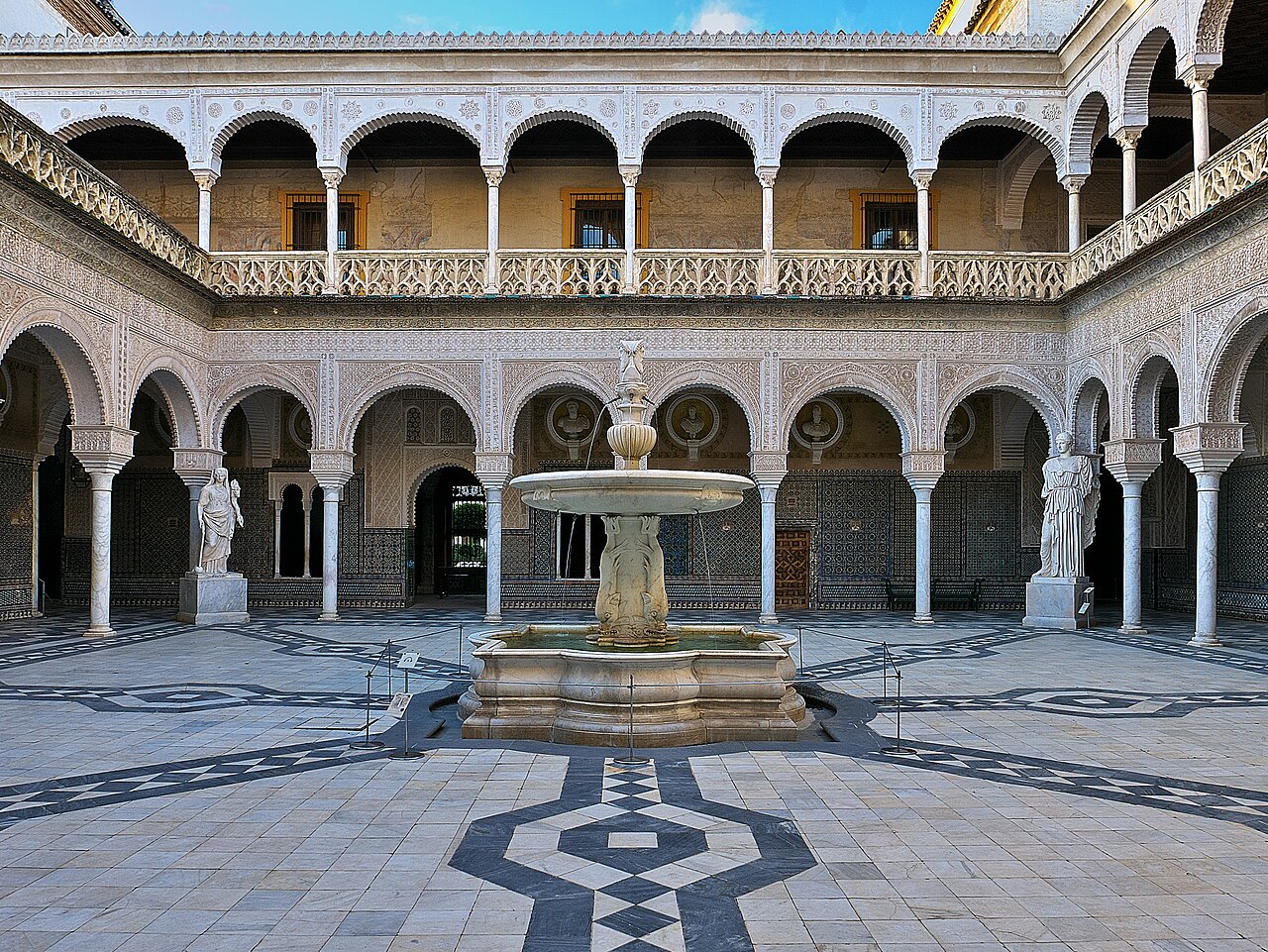
From Las Dueñas it’s about 730 meters, a ten-minute walk, to Casa de Pilatos, which is open every day until 6:00 PM. Admission to the main floor costs €12, and the upper floor, €6 more. If you’re only going to visit one palace, make it this one, purely for logistics: of the four, it’s the only one open every day from 9:00 AM.

If you’d rather see paintings: the Museum of Fine Arts
The Museum of Fine Arts costs €1.50 and is free for European Union citizens. Tuesday to Saturday it’s open from 9:00 AM to 9:00 PM, so it even fits in after the palaces. And this winter brings something new: the Junta is preparing a major retrospective on Juan de Mesa, with more than 30 works, from late 2026 to March 2027.
Wrapping up day 2: the Alameda or the river
Two ways to close out the second day:
- The Alameda de Hércules, for tapas and dinner, a ten-minute walk from the Macarena.
- The river, if you’ve still got daylight and energy left. The Torre del Oro asks for a voluntary €3 contribution and is open until 7:00 PM. About 490 meters away, the Maestranza Bullring costs €12 and, from November 1, is open from 9:00 AM to 7:30 PM; on bullfight days, only until 3:00 PM.
The second day, by day of the week
In Seville, closures are concentrated on Mondays:
| Day | What changes | What to do |
|---|---|---|
| Monday | The Museum of Fine Arts, the Archivo de Indias, the Triana Ceramics Center, and the Cartuja (CAAC) are closed | Morning: Macarena and Triana. Midday: the river (Torre del Oro and Maestranza). Afternoon: Las Dueñas, free from 4:00 PM with booking, or the Venerables |
| Tuesday to Thursday | Everything open | The itinerary as is |
| Friday | Palacio de Lebrija is free at 10:00 AM (ground floor, no booking needed) | Start with Lebrija at 10:00 AM and save the Macarena for afterward |
| Saturday | Everything open, with the Triana Market stalls up and running | The itinerary as is |
| Sunday | The Triana Market stalls are closed (the bars are open from 10:00 AM to 5:00 PM). The Cartuja closes at 3:30 PM and the Museum of Fine Arts at 3:00 PM | Visit the Cartuja before lunch. If you have the afternoon to spare, the Cathedral is free from 5:00 PM, according to the liturgical calendar |
A special case: Monday, December 7, 2026 is a public holiday in Andalusia (the BOJA moves the holiday from the 6th, which falls on a Sunday, to that day), and the Museum of Fine Arts is open that Monday until 3:00 PM.
How much does the second day cost?
Between €0 and €30.50 per person in admission fees, plus the Cartuja, whose price isn’t published:
| Plan | What’s included | Total in tickets |
|---|---|---|
| Minimum | Walls of the Macarena, Triana Market, Alameda de Hércules, and Archivo de Indias (Tuesday to Sunday), or Las Dueñas if it’s Monday afternoon | €0 |
| Balanced | Macarena Museum-Treasury + Casa de Pilatos + Ceramics Center (free with Alcázar ticket) | €15.50 |
| Full | The above + Palacio de las Dueñas | €30.50 |
The Archivo de Indias is free and requires no booking, but it’s closed on Mondays. If your first day left you some time, go then: it’s right next to the Cathedral.
On foot or on wheels: the distances of the second day
Central Seville is easy to walk. The problem with the second day is that it leaves the center. Here are the walking distances between the itinerary stops, calculated by us using the OpenStreetMap pedestrian router, at about 4.5 km/h; these are approximate:
| Stretch | Distance | On foot |
|---|---|---|
| Macarena → Cartuja | 2,520 m | 34 min |
| Cartuja → Triana Market | 1,780 m | 24 min |
| Triana Market → Ceramics Center | 170 m | 2 min |
| Ceramics Center → Palacio de las Dueñas | 2,100 m | 28 min |
| Palacio de las Dueñas → Casa de Pilatos | 730 m | 10 min |
| Casa de Pilatos → Alameda de Hércules | 1,400 m | 19 min |
The full itinerary adds up to about 8.7 km on foot, and almost three-quarters of that is in the three stretches shown in bold: 6.4 km between the three. These are the ones worth doing by bus, taxi, or tuk tuk around Seville; the rest is an easy walk.
By bus, a single TUSSAM ticket costs €1.40 and can be paid with a contactless card when boarding. If you’ll be getting around a lot, the Tourist Card costs €14 for 48 hours.
Seville from November to March
Outside of summer, Seville is a different city: it’s comfortable to walk around at midday, and the sun is welcome. These are the normal AEMET values at Seville Airport (1981-2010 period):
| Month | Average high | Average low | Rainy days | Hours of sunshine |
|---|---|---|---|---|
| November | 20.2°C | 10.0°C | 6.4 | 181 |
| December | 16.6°C | 7.3°C | 7.5 | 154 |
| January | 16.0°C | 5.7°C | 6.1 | 183 |
| February | 18.1°C | 7.0°C | 5.8 | 189 |
| March | 21.9°C | 9.2°C | 4.3 | 220 |
A practical tip: in December and January the average lows hover around 6-7°C, so the Macarena at 9:30 AM calls for a coat, and by midday in Triana it’ll be too much. Dress in layers.
If you’re coming for the December long weekend or Christmas
- December 2026 long weekend: in Andalusia, Monday the 7th (to which the holiday from the 6th is moved, as explained above) and Tuesday the 8th, the Immaculate Conception, are public holidays. From Saturday the 5th to Tuesday the 8th there are four days in a row: book tickets ahead of time.
- Cars in the city center: at Christmas 2025 there were restrictions from December 19 to January 2, 10:00 AM to 10:00 PM. Only the following could enter the Old Town: residents, taxis, motorcycles, hotel guests with a confirmed reservation, and cars heading to an underground car park with available spaces, among others. The 2026-27 plan hasn’t been published yet: if you’re coming by car, expect something similar.
- Christmas closures: the Casa de las Dueñas is closed on December 25 and January 1 and 6, and closes at 3:00 PM on December 24 and 31 and January 5. The Archive of the Indies is closed on December 24, 25, and 31 and January 1 and 6; the Museum of Fine Arts is closed on December 24, 25, and 31.
What to eat on day two
The Triana Market takes care of lunch. For dinner in the Alameda, the Junta’s practical guide to Seville lists the dishes to look out for on the menu:
- Spinach with chickpeas, which the Junta describes as a recipe inherited from the Arabs.
- Spoon dishes: menudo (tripe stew) and oxtail, which are especially appealing in winter.
- Pringá (beef, bacon, chorizo, blood sausage, and ham), served as a mini sandwich in bars, and fish pavías.
- Convent sweets: the yemas from San Leandro and the jams from Santa Paula.
And if you like markets, Visita Sevilla also mentions, besides Triana, the Encarnación market under the Setas, and the Feria market near the Alameda.
The 8.7 km of day two, on wheels
This is where we come in. The morning of day two (Macarena, Cartuja, and Triana) is exactly the part of the itinerary with the longest stretches.
We’re not a sightseeing tour company. We’re electric tuk tuk transport with a host driver: we take you from one point to another, point out what you’re seeing along the way, and recommend where to continue on your own.
- Full 2-Hour Tour: from Macarena to Cartuja (with a stop) via the Barqueta bridge and Paseo de Torneo; Triana, with a stop at the Jardines de María Jiménez; the University, Plaza de España, and Parque de María Luisa, finishing at the Torre del Oro and the Maestranza. This is the morning of day two, on wheels.
- 1-Hour Tour: Macarena and the city walls, the area around the Alcázar, Plaza de España, and the riverside.
- Private tour: up to 4 people per vehicle, at your own pace.
Shall we book it? Check availability in Seville or call +34 689 03 67 38.
If you’re continuing your trip
- What to see in Seville in one day: day one, hour by hour.
- What to see in Ronda in one day: the Puente Nuevo, the old town, and the Tajo Gorge.
- What to see in Málaga in one day: the Alcazaba, the Cathedral, Picasso, and Gibralfaro.
- What to see in Valencia in one day: the old town, the City of Arts and Sciences, and the beach.
Frequently asked questions
How many days do you need to see Seville?
Two days is typical: in 2025, the average hotel stay in the province was 2.05 nights, according to the Provincial Council’s tourism report using INE data, and two nights allow for two full days. With one day you’ll see the main monuments (Cathedral, Alcázar, and Plaza de España); with two, you can add Macarena, Cartuja, the inside of Triana, and the palaces.
What to see in Seville on day two?
In the morning, the north and the river: the Basilica and walls of Macarena, the Cartuja Monastery, and the Triana Market. In the afternoon, two palaces in the center, such as the Casa de Pilatos and the Palacio de las Dueñas, and to wrap up, the Alameda de Hércules or the banks of the Torre del Oro.
What’s closed on Mondays in Seville?
The Museum of Fine Arts, the Archive of the Indies, the Centro Cerámica Triana, and the Cartuja Monastery (CAAC). Open are the Casa de Pilatos, the Palacio de las Dueñas, which is free from 4:00 PM with a booking on its website, and the Hospital de los Venerables, which is open from 10:00 AM to 7:00 PM and has a special schedule with online booking in the afternoon.
What can you see for free in Seville?
The Archive of the Indies, always. The Palacio de las Dueñas, on non-holiday Mondays from 4:00 PM with a booking. The Palacio de Lebrija, on Fridays at 10:00 AM on the ground floor. The Cathedral, on Sundays from 5:00 PM depending on the liturgical schedule. The Centro Cerámica Triana, if you show your Alcázar ticket. And the Museum of Fine Arts, for EU citizens.
Casa de Pilatos or Palacio de las Dueñas?
If you’re only visiting one, go with the Casa de Pilatos (€12), which is open every day. The Dueñas costs €15, but it’s free on non-holiday Mondays from 4:00 PM with a booking.
Is the Castillo de San Jorge open?
Not as an archaeological site. According to Visita Sevilla, the city council’s tourism website, the site itself is closed and only the lobby operates, as a tourist office, every day from 9:30 AM to 2:30 PM.
What’s the weather like in Seville in winter?
Mild during the day and cool in the morning. According to AEMET’s standard climate data (Seville airport, 1981-2010), in December the average high is 16.6°C and the low is 7.3°C, with 7.5 days of rain; in January, 16.0°C and 5.7°C. In November, average highs still reach 20.2°C.
Can you drive into the center of Seville at Christmas?
With some restrictions. For Christmas 2025, from December 19 to January 2, from 10:00 AM to 10:00 PM, the Old Town was restricted to residents, service vehicles, and cars heading to an underground parking garage, among others. The 2026-27 plan has not yet been published.
Written by Pep Mora, from WalkTuk. Prices and hours checked on each monument’s official website on November 2, 2026; please confirm before your visit, as they’re subject to change. Spotted any outdated information? Let us know.